J Korean Med Assoc.
2013 Jan;56(1):30-37. 10.5124/jkma.2013.56.1.30.
Noninvasive brain stimulation: repetitive transcranial magnetic stimulation and transcranial direct current stimulation
- Affiliations
-
- 1Department of Physical and Rehabilitation Medicine, Samsung Medical Center, Sungkyunkwan University School of Medicine, Seoul, Korea. yun1225.kim@samsung.com
- 2Stroke and Cerebrovascular Center, Samsung Medical Center, Sungkyunkwan University School of Medicine, Seoul, Korea.
- KMID: 2192898
- DOI: http://doi.org/10.5124/jkma.2013.56.1.30
Abstract
- Noninvasive brain stimulation provides an effective means of modulating the function of specific neural structures and shows potential for the rehabilitation of patients with brain disorders. Repetitive transcranial magnetic stimulation (rTMS) and transcranial direct current stimulation (tDCS) are two of the most promising noninvasive brain stimulation methods. They can help to avoid surgical risks and provide theoretical advantages of neuromodulation of specific neural circuits. rTMS has been used in two ways: low-frequency stimulation to reduce cortical excitability or high-frequency stimulation to facilitate cortical excitability. Also, the anodal stimulation of tDCS increases the neuronal excitability of the brain area being stimulated and cathodal stimulation of tDCS decreases the neuronal excitability. These neuromodulative effects of rTMS and tDCS have been intensively studied in the field of neuromodulation and neurorehabilitation of patients with brain disorders during the last few decades. Most studies have shown beneficial effects of rTMS or tDCS on clinical symptoms in patients with brain disorders such as stroke and Parkinson's disease. However, stimulation parameters have widely varied, and the small sample size of most studies reduces the strength of the evidence. Nevertheless, minimal side effects, positive evidence, and unveiling the mechanisms of neuromodulation using functional neuroimaging methods have made rTMS and tDCS attractive among the emerging neurorehabilitation tools.
Keyword
MeSH Terms
Figure
-
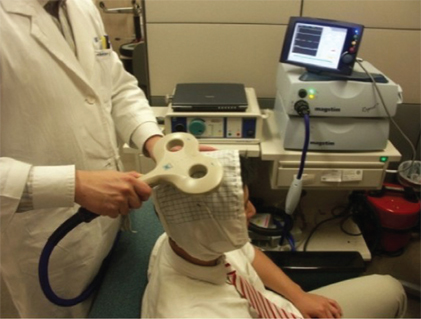
Figure 1 Repetitive transcranial magnetic stimulation.
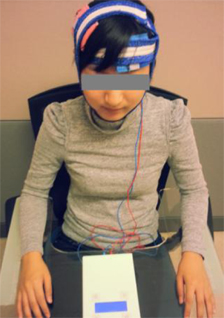
Figure 2 Transcranial direct current stimulation.
Reference
-
1. Braddom RL, Chan L, Harrast MA. Physical medicine and rehabilitation. 4th ed. Philadelphia: Saunders;2011.2. Park CI, Moon JH. Rehabilitation medicine. Seoul: Hanmibook;2007.3. Merton PA, Morton HB. Stimulation of the cerebral cortex in the intact human subject. Nature. 1980; 285:227.
Article4. Priori A, Berardelli A, Rona S, Accornero N, Manfredi M. Polari-zation of the human motor cortex through the scalp. Neuroreport. 1998; 9:2257–2260.
Article5. Barker AT, Jalinous R, Freeston IL. Non-invasive magnetic stimulation of human motor cortex. Lancet. 1985; 1:1106–1107.
Article6. Pascual-Leone A, Houser CM, Reese K, Shotland LI, Grafman J, Sato S, Valls-Sole J, Brasil-Neto JP, Wassermann EM, Cohen LG. Safety of rapid-rate transcranial magnetic stimulation in normal volunteers. Electroencephalogr Clin Neurophysiol. 1993; 89:120–130.
Article7. Corti M, Patten C, Triggs W. Repetitive transcranial magnetic stimulation of motor cortex after stroke: a focused review. Am J Phys Med Rehabil. 2012; 91:254–270.
Article8. Jo JM, Kim YH, Ko MH, Ohn SH, Joen B, Lee KH. Enhancing the working memory of stroke patients using tDCS. Am J Phys Med Rehabil. 2009; 88:404–409.
Article9. Cheeran B, Talelli P, Mori F, Koch G, Suppa A, Edwards M, Houlden H, Bhatia K, Greenwood R, Rothwell JC. A common polymorphism in the brain-derived neurotrophic factor gene (BDNF) modulates human cortical plasticity and the response to rTMS. J Physiol. 2008; 586(Pt 23):5717–5725.
Article10. Ridding MC, Rothwell JC. Is there a future for therapeutic use of transcranial magnetic stimulation? Nat Rev Neurosci. 2007; 8:559–567.
Article11. Sohn MK, Moon JH, Song JW, Park DS. Magnetic stimulation of motor cortex and spinal motor root. J Korean Acad Rehabil Med. 1991; 15:278–286.12. Williams JA, Imamura M, Fregni F. Updates on the use of non-invasive brain stimulation in physical and rehabilitation medicine. J Rehabil Med. 2009; 41:305–311.
Article13. Rossi S, Hallett M, Rossini PM, Pascual-Leone A. Safety of TMS Consensus Group. Safety, ethical considerations, and application guidelines for the use of transcranial magnetic stimulation in clinical practice and research. Clin Neurophysiol. 2009; 120:2008–2039.
Article14. Takeuchi N, Chuma T, Matsuo Y, Watanabe I, Ikoma K. Repetitive transcranial magnetic stimulation of contralesional primary motor cortex improves hand function after stroke. Stroke. 2005; 36:2681–2686.
Article15. Kim YH, You SH, Ko MH, Park JW, Lee KH, Jang SH, Yoo WK, Hallett M. Repetitive transcranial magnetic stimulation-induced corticomotor excitability and associated motor skill acquisition in chronic stroke. Stroke. 2006; 37:1471–1476.
Article16. Liepert J, Zittel S, Weiller C. Improvement of dexterity by single session low-frequency repetitive transcranial magnetic stimulation over the contralesional motor cortex in acute stroke: a double-blind placebo-controlled crossover trial. Restor Neurol Neurosci. 2007; 25:461–465.17. Fregni F, Boggio PS, Valle AC, Rocha RR, Duarte J, Ferreira MJ, Wagner T, Fecteau S, Rigonatti SP, Riberto M, Freedman SD, Pascual-Leone A. A sham-controlled trial of a 5-day course of repetitive transcranial magnetic stimulation of the unaffected hemisphere in stroke patients. Stroke. 2006; 37:2115–2122.
Article18. Takeuchi N, Tada T, Toshima M, Chuma T, Matsuo Y, Ikoma K. Inhibition of the unaffected motor cortex by 1 Hz repetitive transcranical magnetic stimulation enhances motor perform-ance and training effect of the paretic hand in patients with chronic stroke. J Rehabil Med. 2008; 40:298–303.
Article19. Chang WH, Kim YH, Bang OY, Kim ST, Park YH, Lee PK. Long-term effects of rTMS on motor recovery in patients after subacute stroke. J Rehabil Med. 2010; 42:758–764.
Article20. Emara TH, Moustafa RR, Elnahas NM, Elganzoury AM, Abdo TA, Mohamed SA, Eletribi MA. Repetitive transcranial magnetic stimulation at 1Hz and 5Hz produces sustained improvement in motor function and disability after ischaemic stroke. Eur J Neurol. 2010; 17:1203–1209.
Article21. Avenanti A, Coccia M, Ladavas E, Provinciali L, Ceravolo MG. Low-frequency rTMS promotes use-dependent motor plasticity in chronic stroke: a randomized trial. Neurology. 2012; 78:256–264.
Article22. Wang RY, Tseng HY, Liao KK, Wang CJ, Lai KL, Yang YR. rTMS combined with task-oriented training to improve symmetry of interhemispheric corticomotor excitability and gait perform-ance after stroke: a randomized trial. Neurorehabil Neural Repair. 2012; 26:222–230.
Article23. Rektorova I, Megova S, Bares M, Rektor I. Cognitive func-tioning after repetitive transcranial magnetic stimulation in patients with cerebrovascular disease without dementia: a pilot study of seven patients. J Neurol Sci. 2005; 229-230:157–161.
Article24. Kim BR, Kim DY, Chun MH, Yi JH, Kwon JS. Effect of repeti-tive transcranial magnetic stimulation on cognition and mood in stroke patients: a double-blind, sham-controlled trial. Am J Phys Med Rehabil. 2010; 89:362–368.
Article25. Kim YH, Min SJ, Ko MH, Park JW, Jang SH, Lee PK. Facilitating visuospatial attention for the contralateral hemifield by repetitive TMS on the posterior parietal cortex. Neurosci Lett. 2005; 382:280–285.
Article26. Song W, Du B, Xu Q, Hu J, Wang M, Luo Y. Low-frequency transcranial magnetic stimulation for visual spatial neglect: a pilot study. J Rehabil Med. 2009; 41:162–165.
Article27. Lim JY, Kang EK, Paik NJ. Repetitive transcranial magnetic stimulation to hemispatial neglect in patients after stroke: an open-label pilot study. J Rehabil Med. 2010; 42:447–452.
Article28. Koch G, Bonni S, Giacobbe V, Bucchi G, Basile B, Lupo F, Versace V, Bozzali M, Caltagirone C. θ-burst stimulation of the left hemisphere accelerates recovery of hemispatial neglect. Neurology. 2012; 78:24–30.
Article29. Jorge RE, Robinson RG, Tateno A, Narushima K, Acion L, Moser D, Arndt S, Chemerinski E. Repetitive transcranial magnetic stimulation as treatment of poststroke depression: a preliminary study. Biol Psychiatry. 2004; 55:398–405.
Article30. Barwood CH, Murdoch BE, Whelan BM, Lloyd D, Riek S, O'Sullivan JD, Coulthard A, Wong A. Improved language performance subsequent to low-frequency rTMS in patients with chronic non-fluent aphasia post-stroke. Eur J Neurol. 2011; 18:935–943.
Article31. Weiduschat N, Thiel A, Rubi-Fessen I, Hartmann A, Kessler J, Merl P, Kracht L, Rommel T, Heiss WD. Effects of repetitive transcranial magnetic stimulation in aphasic stroke: a random-ized controlled pilot study. Stroke. 2011; 42:409–415.
Article32. Khedr EM, Abo-Elfetoh N. Therapeutic role of rTMS on re-covery of dysphagia in patients with lateral medullary syndrome and brainstem infarction. J Neurol Neurosurg Psychiatry. 2010; 81:495–499.
Article33. Elahi B, Elahi B, Chen R. Effect of transcranial magnetic stimu-lation on Parkinson motor function: systematic review of controlled clinical trials. Mov Disord. 2009; 24:357–363.
Article34. Kim DY, Park CI, Jung KJ, Ohn SH, Park KD, Park JB, Oh YT. Improvement of chronic post-stroke hemiparetic upper limb function after 2 week trascranial direct current stimulation. J Korean Acad Rehabil Med. 2009; 33:5–11.35. Hummel F, Celnik P, Giraux P, Floel A, Wu WH, Gerloff C, Cohen LG. Effects of non-invasive cortical stimulation on skilled motor function in chronic stroke. Brain. 2005; 128(Pt 3):490–499.
Article36. Kim DY, Lim JY, Kang EK, You DS, Oh MK, Oh BM, Paik NJ. Effect of transcranial direct current stimulation on motor re-covery in patients with subacute stroke. Am J Phys Med Rehabil. 2010; 89:879–886.
Article37. Rossi C, Sallustio F, Di Legge S, Stanzione P, Koch G. Trans-cranial direct current stimulation of the affected hemisphere does not accelerate recovery of acute stroke patients. Eur J Neurol. 2012; 03. 26. [Epub] DOI: 10.1111/j.1468-1331.2012.03703.x.
Article38. Bastani A, Jaberzadeh S. Does anodal transcranial direct current stimulation enhance excitability of the motor cortex and motor function in healthy individuals and subjects with stroke: a systematic review and meta-analysis. Clin Neurophysiol. 2012; 123:644–657.
Article39. You DS, Kim DY, Chun MH, Jung SE, Park SJ. Cathodal transcranial direct current stimulation of the right Wernicke's area improves comprehension in subacute stroke patients. Brain Lang. 2011; 119:1–5.
Article40. Kang EK, Baek MJ, Kim S, Paik NJ. Non-invasive cortical stimulation improves post-stroke attention decline. Restor Neurol Neurosci. 2009; 27:645–650.
Article41. Ko MH, Han SH, Park SH, Seo JH, Kim YH. Improvement of visual scanning after DC brain polarization of parietal cortex in stroke patients with spatial neglect. Neurosci Lett. 2008; 448:171–174.
Article42. Benninger DH, Lomarev M, Lopez G, Wassermann EM, Li X, Considine E, Hallett M. Transcranial direct current stimulation for the treatment of Parkinson.s disease. J Neurol Neurosurg Psychiatry. 2010; 81:1105–1111.
Article43. Ohn SH, Chang WH, Park CH, Kim ST, Lee JI, Pascual-Leone A, Kim YH. Neural correlates of the antinociceptive effects of repetitive transcranial magnetic stimulation on central pain after stroke. Neurorehabil Neural Repair. 2012; 26:344–352.
Article44. Yoo WK, You SH, Ko MH, Tae Kim S, Park CH, Park JW, Hoon Ohn S, Hallett M, Kim YH. High frequency rTMS modulation of the sensorimotor networks: behavioral changes and fMRI correlates. Neuroimage. 2008; 39:1886–1895.
Article
- Full Text Links
-
- Actions
-
Cited
- CITED
-
- Close
- Share
-
- Similar articles
-
- Application of Non-invasive Brain Stimulation on Dysphagia after Stroke
- Non-Invasive Brain Stimulation for Treatment of Focal Hand Dystonia: Update and Future Direction
- Therapeutic Application of Transcranial Magnetic Stimulation and Transcranial Direct Current Stimulation in Depression
- Non-Invasive Neuromodulation for Tinnitus
- Neuromodulation for the Treatment of Tinnitus