
Development of Dual-mode Signal Processing Module for Multi-slit Prompt-gamma Camera
- Affiliations
-
- 1Department of Nuclear Engineering, Hanyang University, Seoul, Korea. chkim@hanyang.ac.kr
- 2IT Convergence Technology Research Laboratory, Electronics and Telecommunications Research Institute, Daejeon, Korea.
- 3Proton Therapy Center, National Cancer Center, Goyang, Korea.
- KMID: 2161937
- DOI: http://doi.org/10.14316/pmp.2016.27.1.37
Abstract
- In proton therapy, in vivo proton beam range verification is very important to deliver conformal dose to the target volume and minimize unnecessary dose to normal tissue. For this purpose, a multi-slit prompt-gamma camera module made of 24 scintillation detectors and 24-channel signal processing system is under development. In the present study, we have developed and tested a dual-mode signal processing system, which can operate in the energy calibration mode and the fast data acquisition mode, to process the signals from the 24 scintillation detectors. As a result of performance test, using the energy calibration mode, we were able to perform energy calibration for the 24 scintillation detectors at the same time and determine the discrimination levels for the detector channels. Further, using the fast data acquisition mode, we were able to measure a prompt-gamma distribution induced by a 45 MeV proton beam. The measured prompt gamma distribution was found similar to the proton dose distribution at the distal fall-off region, and the estimated beam range was 17.13±0.76 mm, which is close to the proton beam range of 16.15 mm measured by an EBT film.
Keyword
Figure
-
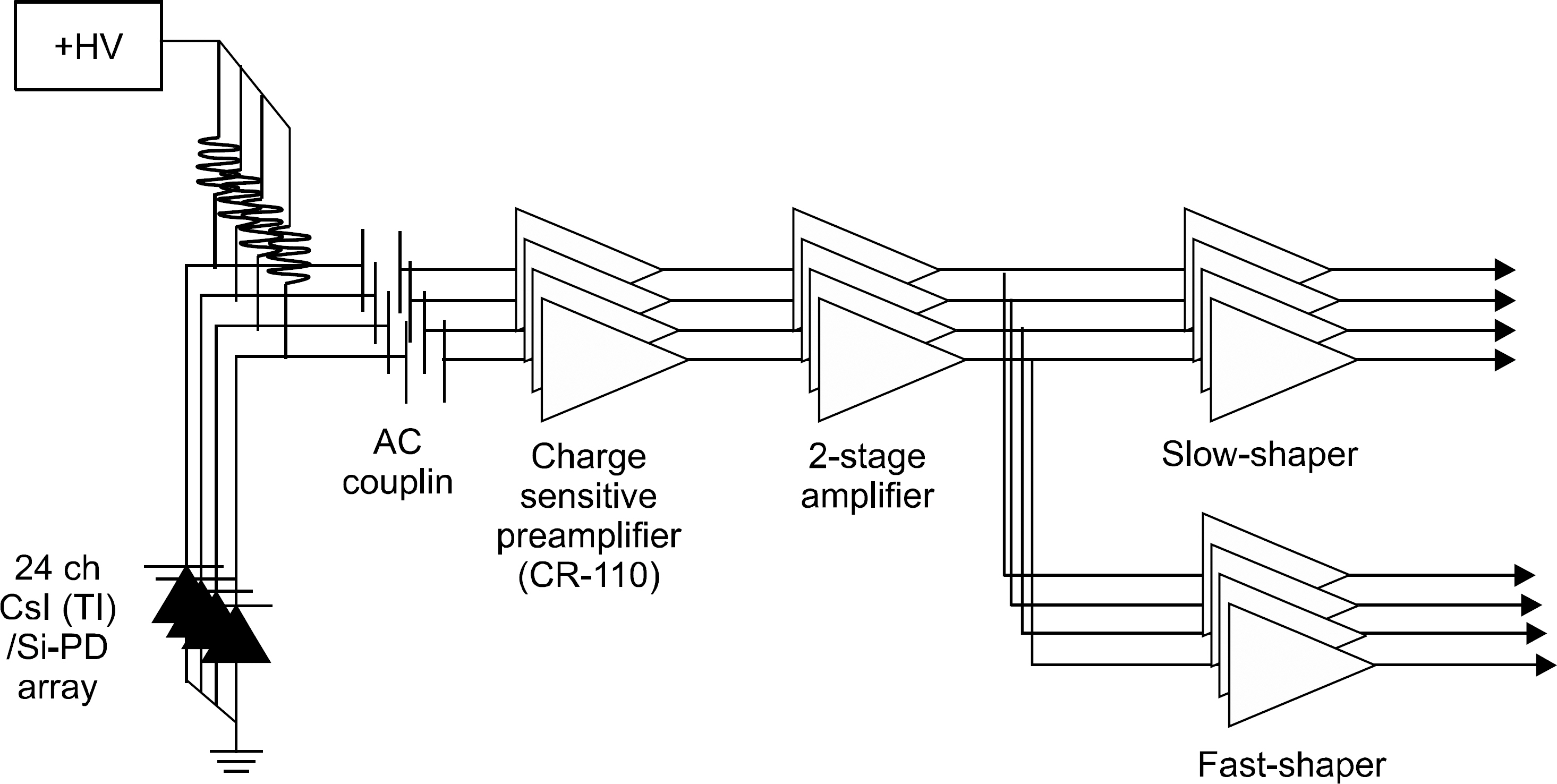
Fig. 1. Schematic diagram of 24- channel front-end electronics system including charge sensitive amplifiers and slow and fast shaping amplifiers.
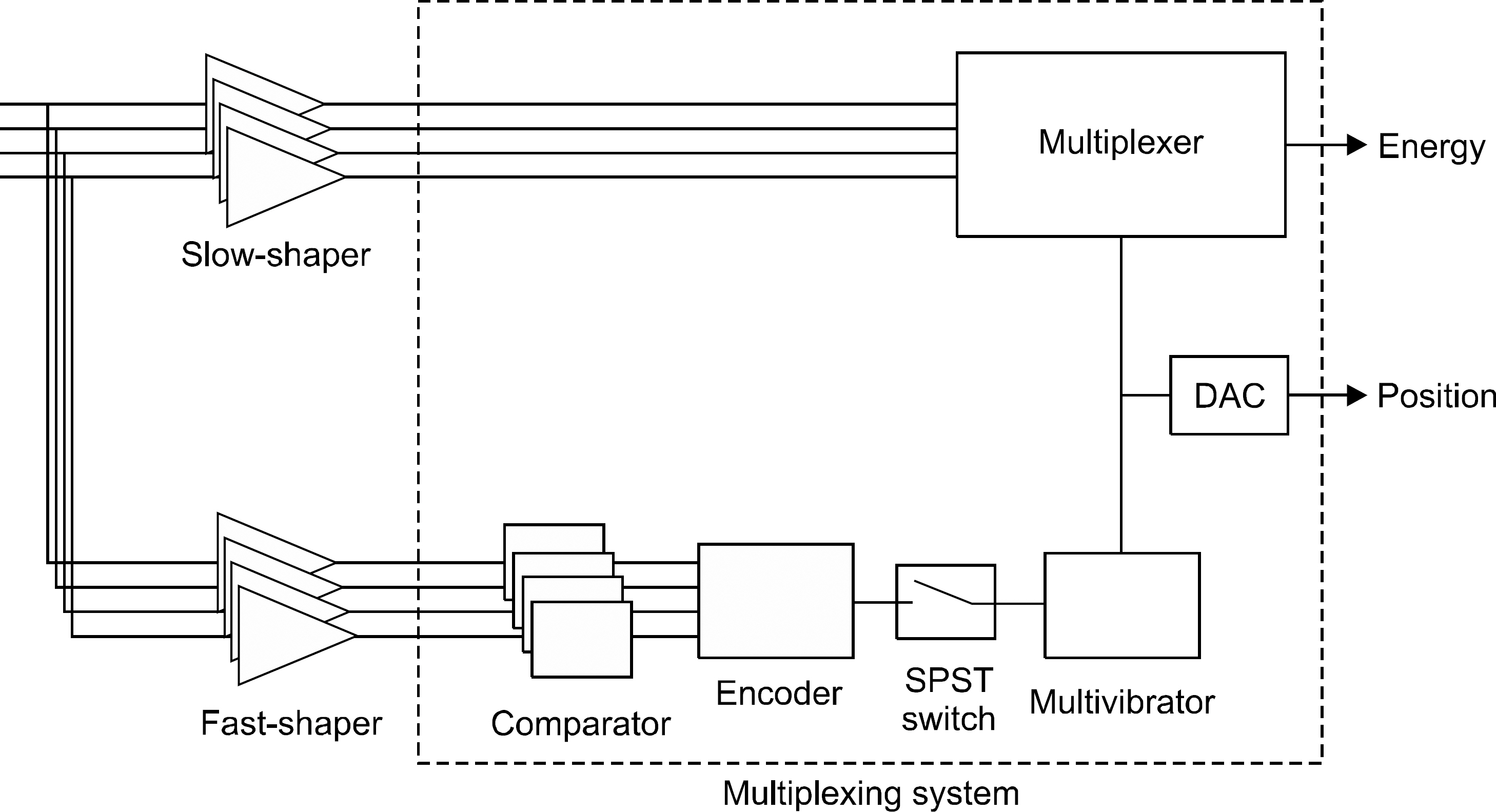
Fig. 2. Schematic diagram of multiplexing system for energy calibration mode.

Fig. 3. Schematic diagram of counting system for fast data acquisition mode.
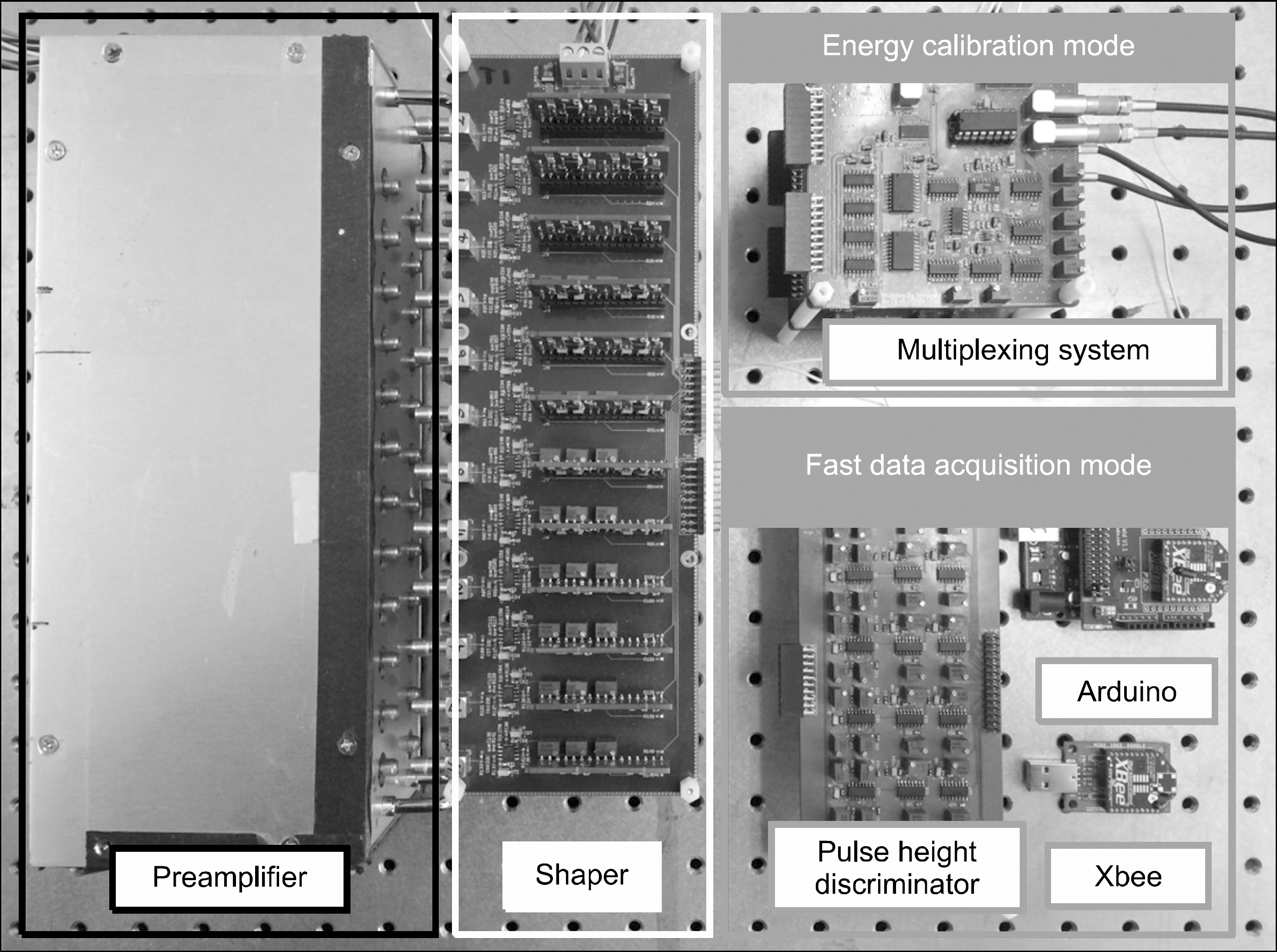
Fig. 4. Assembled dual-mode signal processing system including pream-plifiers, shapers, a multiplexing system, pulse height discrimina-tors, a microcontroller (Arduino), an Xbee.
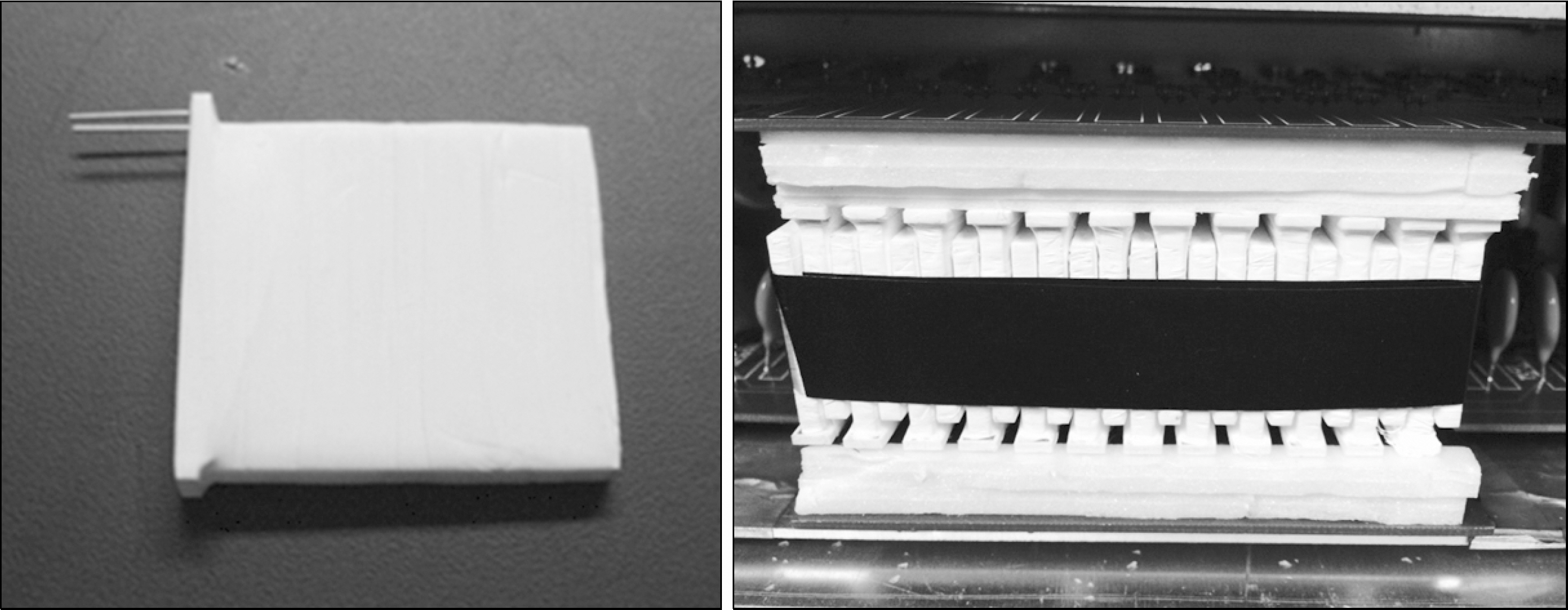
Fig. 5. A scintillation detector (left) and an array of 24-channel scintillation detectors (right).
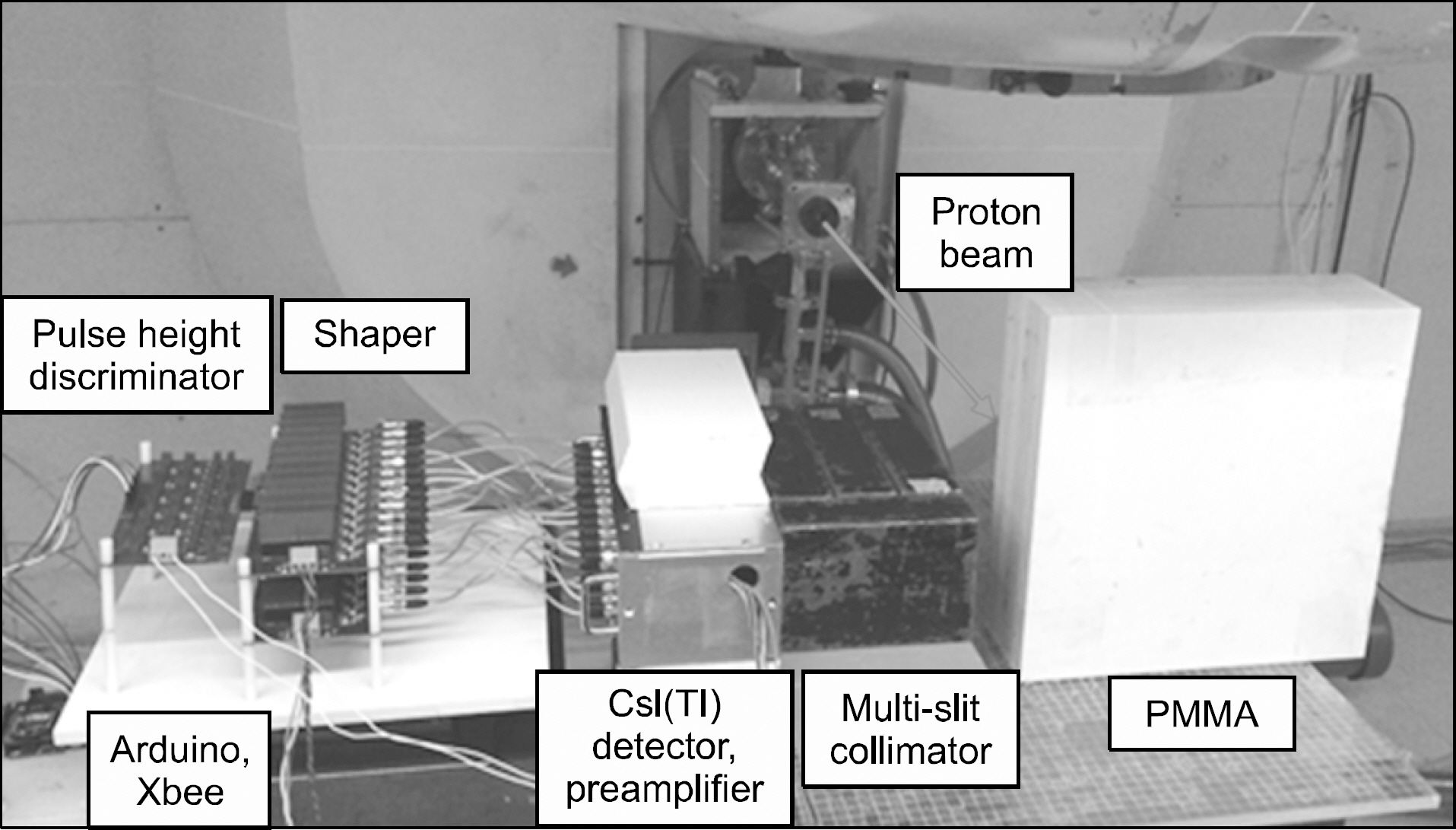
Fig. 6. Experiment setting to measure prompt gamma from a 45 MeV proton beam.
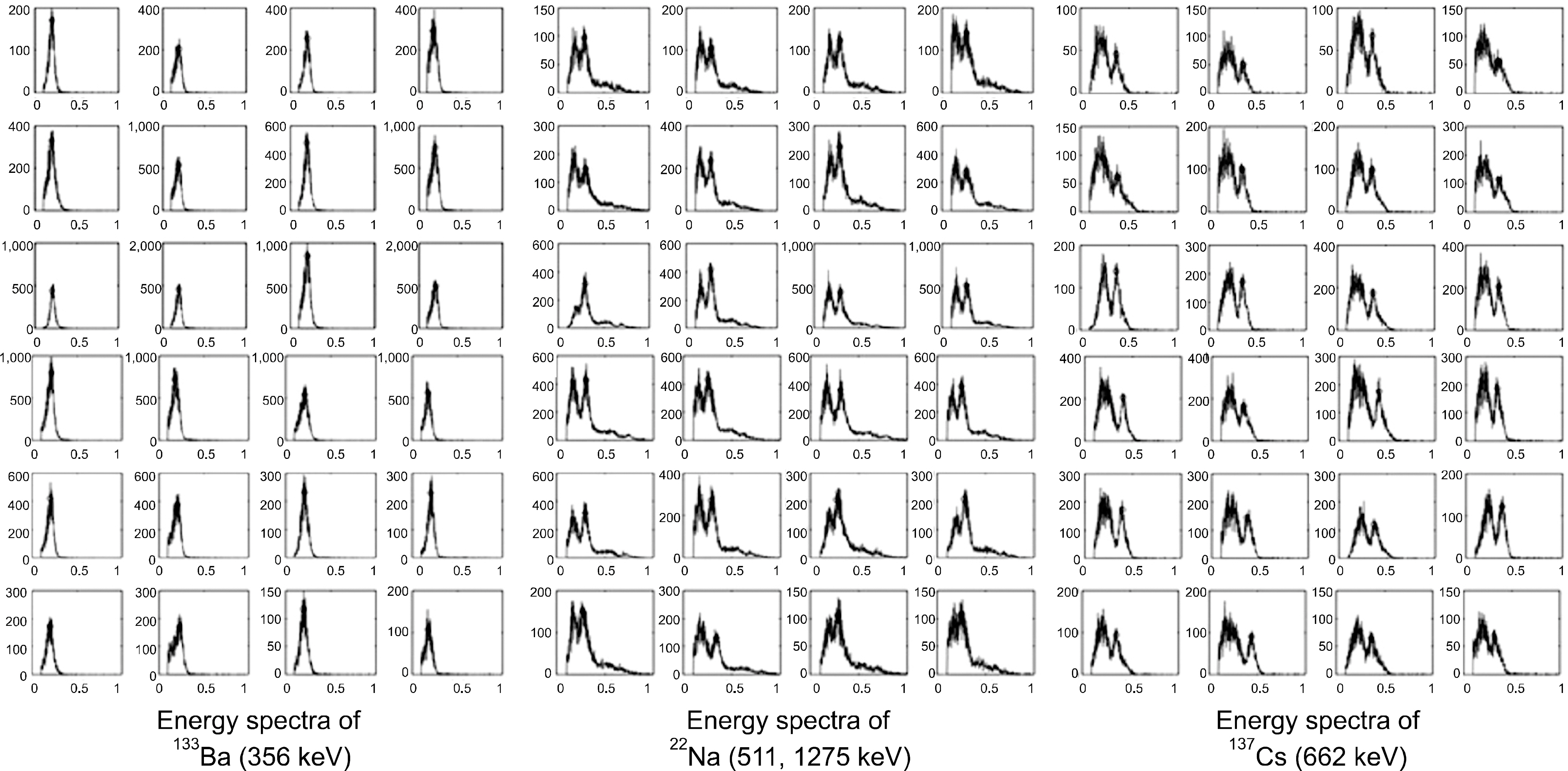
Fig. 8. Energy calibration curves for the 24 channels of the signal processing system.
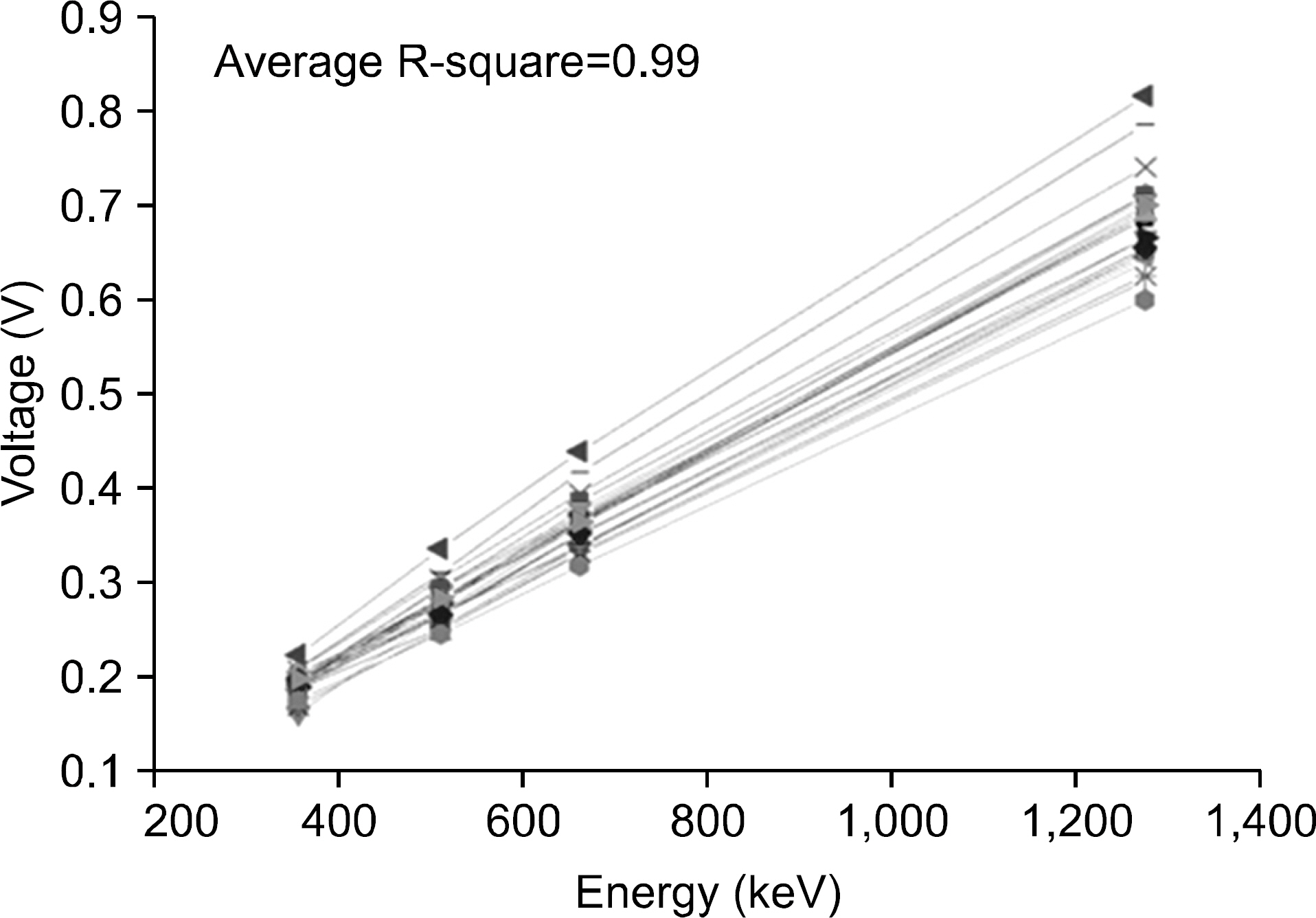
Fig. 7. Energy spectra of mode of the dual-mode signal processing system developed in the present study.133 Ba (356 keV), 22 Na (511 keV, 1,275 keV), 137 Cs (662 keV) sources measured by the energy calibration

Fig. 9. Proton dose distribution (left) and its profile (right) measured by an EBT film.
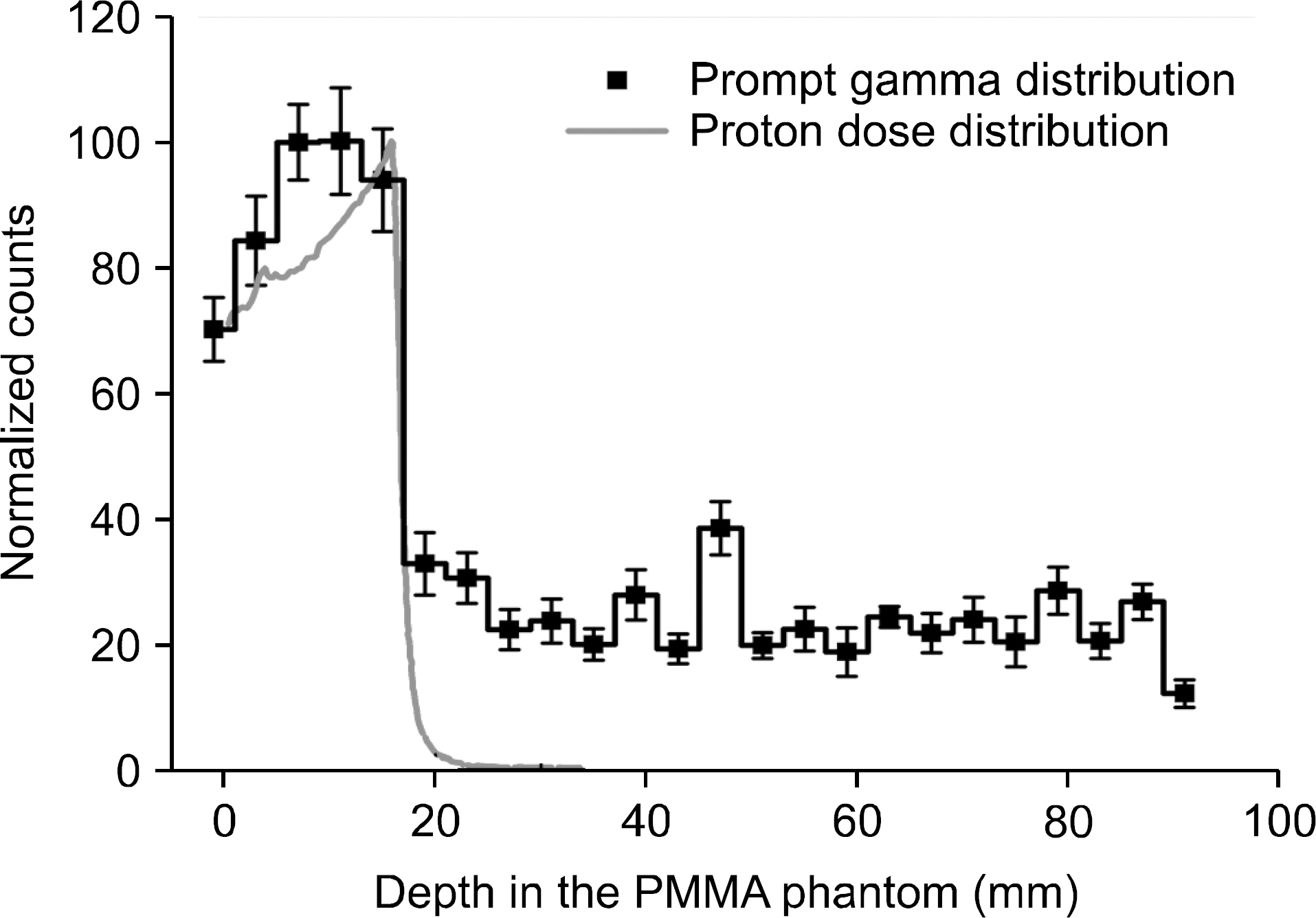
Fig. 10. Promptgamma distribution measured by the multi-slit prompt-gamma camera in the fast data acquisition mode for a 45 MeV proton beam of 3×10¹⁰ protons. The film measured proton dose distribution is shown for comparison.
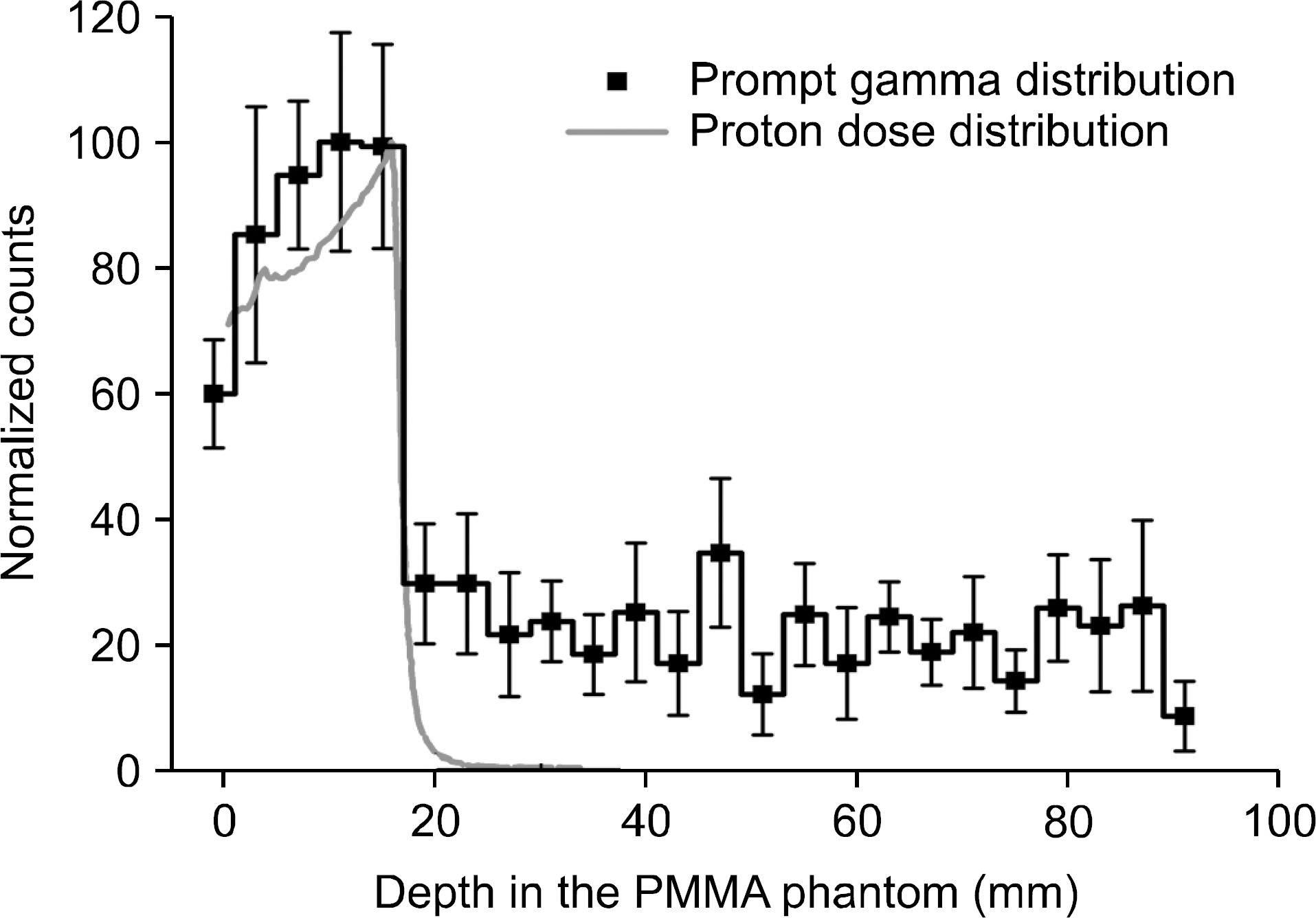
Fig. 11. Promptgamma distribution measured by the multi-slit prompt-gamma camera in the fast data acquisition mode for a 45 MeV proton beam of 3×10⁹ protons. The film measured proton dose distribution is shown for comparison.
Cited by 1 articles
-
Correction of Prompt Gamma Distribution for Improving Accuracy of Beam Range Determination in Inhomogeneous Phantom
Jong Hoon Park, Sung Hun Kim, Youngmo Ku, Hyun Su Lee, Young-su Kim, Chan Hyeong Kim, Dong Ho Shin, Se Byeong Lee, Jong Hwi Jeong
Prog Med Phys. 2017;28(4):207-217. doi: 10.14316/pmp.2017.28.4.207.
Reference
-
References
1. Paganetti H. Rangeuncertaintiesinprotontherapyandthe roleofMonteCarlosimulations.Phys.Med.Biol. 57:R99–R117. 2012.2. Knopf AC, Lomax A. Invivoprotonrangeverification: a review.Phys.Med.Biol. 58:R131–R160. 2012.3. Stichelbaut F, Jongen Y. Verificationoftheprotonbeam positioninthepatientbythedetectionofpromptgamma-rays emission. Meetingof39thParticleTherapyCo-OperativeGroup. (San Francisco,. 2003.4. Min CH, Kim CH, Youn MY, Kim JW. Promptgamma measurementsforlocatingthedosefall-offregionintheproton therapy.Appl.Phys.Lett. 89:183517. 2006.5. Smeets J, Roellinghoff F, Prieels D, Stichelbaut F, Benilov A, Busca P, Fiorini C, Peloso R, Basilavecchia M, Frizzi T, Dehaes JC Dubus A. Promptgammaimaging withaslitcameraforreal-timerangecontrolinprotontherapy. Phys.Med.Biol. 57:3371–3405. 2012.6. Bom V, Joulaeizadeh L, Beekman F. Real-timeprompt gammamonitoringinspot-scanningprotontherapyusingimagingthroughaknife-edge-shapedslit.Phys.Med.Biol. 57:297–308. 2012.7. Perali I, Celani A, Bombelli L, Fiorini C, Camera F, Clementel E, Henrotin S, Janssens G, Prieels D, Roellinghoff F, Smeets J, Stichelbaut F, Stappen FV. Promptgammaimagingofprotonpencilbeamsatclinicaldose rate.Phys.Med.Biol. 59:5849–5871. 2014.8. Priegnitz M, Helmbrecht S, Janssens G, Perali I, Smeets J, Stappen FV, Sterpin E, Fiedler F. Detection ofmixed-rangeprotonpencilbeamswithapromptgammaslit camera.Phys.Med.Biol. 61:855–871. 2016.9. Frandes M, Zoglauer A, Maxim V, Prost R. Atracking Compton-scatteringimagingsystemforhadrontherapy monitoring.IEEETrans. Nuc.Sci. 57:144–150. 2010.10. Richard MH, Chevallier M, Dauvergne D, Freud N, Henriquet P, Le Foulher, Letang JM, Montarou G, Ray C, Roellinghoff F, Testa E, Testa M, Walenta AH. DesignguidelinesforadoublescatteringComptoncamerafor prompt-gammaimagingduringionbeamtherapy: aMonte Carlosimulationstudy.IEEETrans.Nuc.Sci. 58:87–94. 2011.11. Polf JC, Avery S, Mackin DS, Beddar S. Evaluationofa stochasticreconstructionalgorithmforuseinComptoncamera imagingandbeamrangeverificationfromsecondarygamma emissionduringprotontherapy.Phys.Med.Biol. 57:3537–3553. 2012.12. Krimmer J, Ley JL, Abellan C, Cachemiche JP, Caponetto L, Chen X, Dahoumane M, Dauvergne D, Freud N, Joly B, Lambert D, Lestand L, Letang JM, Magne M, Mathez H, Maxim V, Montarou G, Morel C, Pinto M, Ray C, Reithinger V, Testa E, Zoccarato Y. DevelopmentofaComptoncameraformedicalapplications basedonsiliconstripandscintillationdetectors.Nucl.Instrum. Meth.A. 787:98–101. 2014.13. Mackin D, Peterson S, Beddar S, Polf JC. Imagingof promptgammaraysemittedduringdeliveryofclinicalproton beamswithaComptoncamera: Feasibilitystudiesforrange verification.Phys.Med.Biol. 60:7085–7099. 2015.14. Kim CH, Park JH, Seo H, Lee HR. Gammaelectronvertex imaingandapplicationtobeamrangeverificationinproton therapy.Med.Phys. 39:1001–1005. 2012.15. Lee HR, Park JH, Kim JH, Jung WG, Kim CH. Developmentofsignalprocessingmodulesfordouble-sidedsil-iconstripdetectorofgammaverteximagingforprotonbeam doseverification.J.Radiat.Prot. 39(2):81–88. 2014.16. Golnik C, Hueso-Gonzalez F, Muller A, Dendooven P, Enghardt W, Fiedler F, Kormoll T, Roemer K, Petzoldt J, Wagner A, Pausch G. Rangeassessmentinparticletherapybasedonpromptγ-raytimingmeasurements.Phys.Med. Biol. 59:5399–5422. 2014.17. Hueso-Gonzalez F, Enghardt W, Fiedler F, Golnik C, Janssens G, Petzoldt J, Prieels D, Priegnitz M, Romer K, Smeets J. Firsttestofthepromptgammaraytimingmeth-odwithheterogeneoustargetsataclinicalrotontherapyfacility. Phys.Med.Biol. 60:6247–6272. 2015.18. Min CH, Lee HR, Kim CH, Lee SB. Developmentofar-ray-typepromptgammameasurementsystemforinvivorange verificationinprotontherapy.Med.Phys. 39:2100–2107. 2012.19. 이한림, 박종훈, 김한성, 김찬형. 다채널 방사선 측정 장치의 데이터 획득 채널수 저감을 위한 멀티플렉싱 시스템 개발.2013춘계학술발표회 논문요약집 대한방사선방어학회. 140-141:2013.
- Full Text Links
-
- Actions
-
Cited
- CITED
-
- Close
- Share
-
- Similar articles
-
- Correction of Prompt Gamma Distribution for Improving Accuracy of Beam Range Determination in Inhomogeneous Phantom
- Investigation of the Signal Characteristics of a Small Gamma Camera System Using NaI(Tl)-Position Sensitive Photomultiplier Tube
- Coded Aperture Gamma Camera for Thyroid Imaging: Monte Carlo Simulation
- Application of Renal Gamma Camera in the Evaluation of Renal Disease
- Multi-tracer Imaging of a Compton Camera


