
Evaluation of a Targeted Next-generation Sequencing Assay for BRCA Mutation Screening in Clinical Samples

- Affiliations
-
- 1Department of Laboratory Medicine, Seoul National University Hospital, Seoul, Korea
- 2Research & Development Centre, NGeneBio Co., Ltd., Seoul, Korea
- KMID: 2526090
- DOI: http://doi.org/10.47429/lmo.2021.11.4.283
Abstract
- Background
While several factors contribute to breast cancer pathogenesis, hereditary breast cancer results from a genetic predisposition. Genes associated with hereditary breast cancer may be divided into high- and low-penetrance genes depending on their risk rates. BRCA1 and BRCA2 are typical high-penetrance genes that increase the risk of developing breast and ovarian cancers upon undergoing mutations. This study aimed to evaluate the clinical performance of BRCAaccuTestTM (NGeneBio, Korea).
Methods
BRCAaccuTestTM is a reagent used to produce libraries for analyzing BRCA1/2 genes using next-generation sequencing (NGS), which analyzes blood-derived genomic DNA. Libraries with adapters and barcodes compatible with the Illumina platform were produced. The clinical performance of NGS-based BRCAaccuTestTM in identifying BRCA1/2mutations was compared with that of the traditional Sanger sequencing method. Both NGS and Sanger sequencing were performed in a single laboratory using archival DNA from blood samples of 212 patients with breast cancer.
Results
All target regions amplified were successfully sequenced to obtain a minimum coverage of 20, demonstrating 100% concordance with the pathogenic single-nucleotide variations and small insertions-deletions previously identified by Sanger sequencing.
Conclusions
This study demonstrates the feasibility of using BRCAaccuTestTM to detect the BRCA1/2 mutations with high accuracy.
Keyword
Figure
-
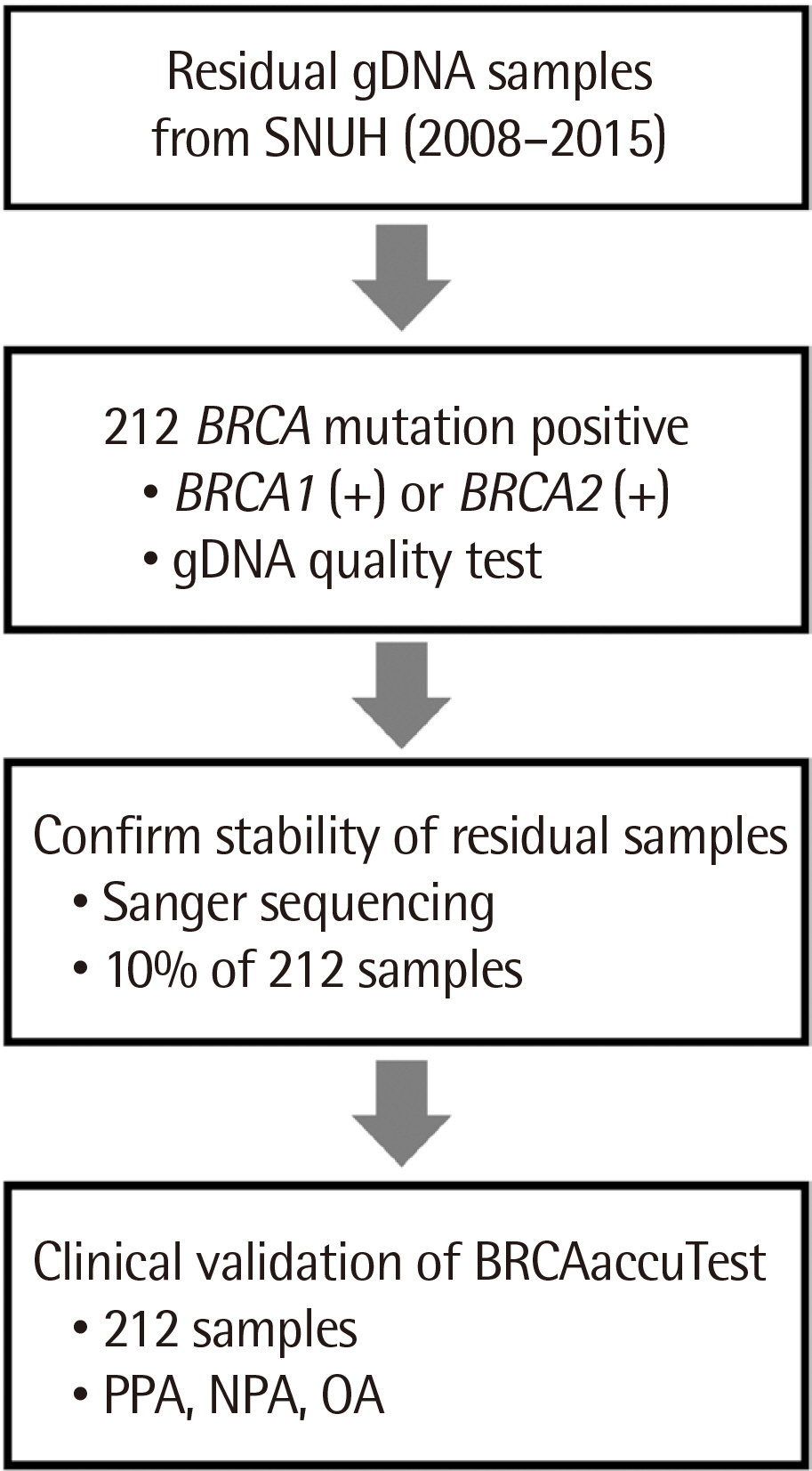
Fig. 1 Design of the clinical study. The target number of test samples was determined according to the criteria of 0.99 diagnostic positive/negative agreement, 80% power, and 5% statistical significance. Abbreviations: PPA, positive percent agreement; NPA, negative percent agreement; OA, overall agreement.

Fig. 2 Quantity and size of the final libraries. (A) The libraries of samples B001 to B207 were quantified and represented in nanomole (nM) quantities in correlation to the amount of input DNA (ng). The black dashed lines indicate the range of the input DNA used in this study. The red dashed arrow represents the average concentration of the library. The blue dashed arrow represents the minimum concentration of the library. (B) The size of each library was individually determined and represented as a dot. The red dashed line indicates the average size (bp) of the library. The blue dashed lines represent the range of the library size (300–500 bp). B021 was excluded owing to an insufficient amount of sample.
Reference
-
1. Heymach J, Krilov L, Alberg A, Baxter N, Chang SM, Corcoran RB, et al. 2018; Clinical Cancer Advances 2018: Annual report on progress against cancer from the American Society of Clinical Oncology. J Clin Oncol. 36:1020–44. DOI: 10.1200/JCO.2017.77.0446. PMID: 29380678.
Article2. Jung KW, Won YJ, Kong HJ, Lee ES. 2018; Prediction of cancer incidence and mortality in Korea, 2018. Cancer Res Treat. 50:317–23. DOI: 10.4143/crt.2018.142. PMID: 29566480. PMCID: PMC5912149.
Article3. Jung KW, Won YJ, Kong HJ, Lee ES. Community of Population-Based Regional Cancer R. 2018; Cancer statistics in Korea: Incidence, mortality, survival, and prevalence in 2015. Cancer Res Treat. 50:303–16. DOI: 10.4143/crt.2018.143. PMID: 29566481. PMCID: PMC5912151.
Article4. Park HS, Park SJ, Kim JY, Kim S, Ryu J, Sohn J, et al. 2017; Next-generation sequencing of BRCA1/2 in breast cancer patients: potential effects on clinical decision-making using rapid, high-accuracy genetic results. Ann Surg Treat Res. 92:331–9. DOI: 10.4174/astr.2017.92.5.331. PMID: 28480178. PMCID: PMC5416916.5. Janavičius R. 2010; Founder BRCA1/2 mutations in the Europe: implications for hereditary breast-ovarian cancer prevention and control. EPMA J. 1:397–412. DOI: 10.1007/s13167-010-0037-y. PMID: 23199084. PMCID: PMC3405339.6. Antoniou A, Pharoah PD, Narod S, Risch HA, Eyfjord JE, Hopper JL, et al. 2003; Average risks of breast and ovarian cancer associated with BRCA1 or BRCA2 mutations detected in case series unselected for family history: a combined analysis of 22 studies. Am J Hum Genet. 72:1117–30. DOI: 10.1086/375033. PMID: 12677558. PMCID: PMC1180265.7. Mavaddat N, Peock S, Frost D, Ellis S, Platte R, Fineberg E, et al. 2013; Cancer risks for BRCA1 and BRCA2 mutation carriers: results from prospective analysis of EMBRACE. J Natl Cancer Inst. 105:812–22. DOI: 10.1093/jnci/djt095. PMID: 23628597.8. D'Argenio V, Esposito MV, Telese A, Precone V, Starnone F, Nunziato M, et al. 2015; The molecular analysis of BRCA1 and BRCA2: Next-generation sequencing supersedes conventional approaches. Clin Chim Acta. 446:221–5. DOI: 10.1016/j.cca.2015.03.045. PMID: 25896959.9. Wallace AJ. 2016; New challenges for BRCA testing: a view from the diagnostic laboratory. Eur J Hum Genet. 24 Suppl 1:S10–8. DOI: 10.1038/ejhg.2016.94. PMID: 27514839. PMCID: PMC5141576.10. Ruiz A, Llort G, Yagüe C, Baena N, Viñas M, Torra M, et al. 2014; Genetic testing in hereditary breast and ovarian cancer using massive parallel sequencing. Biomed Res Int. 2014:542541. DOI: 10.1155/2014/542541. PMID: 25136594. PMCID: PMC4098986.
Article11. Hajian-Tilaki K. 2014; Sample size estimation in diagnostic test studies of biomedical informatics. J Biomed Inform. 48:193–204. DOI: 10.1016/j.jbi.2014.02.013. PMID: 24582925.
Article12. Joshi NA, Fass JN. Sickle: A sliding-window, adaptive, quality-based trimming tool for FastQ les (Version 1.33) [Software]. https://github.com/najoshi/sickle. Updated on Jul 2014.13. Li H, Durbin R. 2009; Fast and accurate short read alignment with Burrows-Wheeler transform. Bioinformatics. 25:1754–60. DOI: 10.1093/bioinformatics/btp324. PMID: 19451168. PMCID: PMC2705234.
Article14. DePristo MA, Banks E, Poplin R, Garimella KV, Maguire JR, Hartl C, et al. 2011; A framework for variation discovery and genotyping using next-generation DNA sequencing data. Nat Genet. 43:491–8. DOI: 10.1038/ng.806. PMID: 21478889. PMCID: PMC3083463.
Article15. Garrison E, Marth G. Haplotype-based variant detection from short-read sequencing. https://arxiv.org/abs/1207.3907. Updated on Jul 2012.16. Cingolani P, Platts A, Wang le L, Coon M, Nguyen T, Wang L, et al. 2012; A program for annotating and predicting the effects of single nucleotide polymorphisms, SnpEff: SNPs in the genome of Drosophila melanogaster strain w1118; iso-2; iso-3. Fly (Austin). 6:80–92. DOI: 10.4161/fly.19695. PMID: 22728672. PMCID: PMC3679285.17. Richards S, Aziz N, Bale S, Bick D, Das S, Gastier-Foster J, et al. 2015; Standards and guidelines for the interpretation of sequence variants: a joint consensus recommendation of the American College of Medical Genetics and Genomics and the Association for Molecular Pathology. Genet Med. 17:405–24. DOI: 10.1038/gim.2015.30. PMID: 25741868. PMCID: PMC4544753.
Article18. Kechin A, Khrapov E, Boyarskikh U, Kel A, Filipenko M. 2018; BRCA-analyzer: Automatic work ow for processing NGS reads of BRCA1 and BRCA2 genes. Comput Biol Chem. 77:297–306. DOI: 10.1016/j.compbiolchem.2018.10.012. PMID: 30408727.19. Ermolenko NA, Boyarskikh UA, Kechin AA, Mazitova AM, Khrapov EA, Petrova VD, et al. 2015; Massive parallel sequencing for diagnostic genetic testing of BRCA genes--a single center experience. Asian Pac J Cancer Prev. 16:7935–41. DOI: 10.7314/APJCP.2015.16.17.7935. PMID: 26625824.20. Suryavanshi M, Kumar D, Panigrahi MK, Chowdhary M, Mehta A. 2017; Detection of false positive mutations in BRCA gene by next generation sequencing. Fam Cancer. 16:311–7. DOI: 10.1007/s10689-016-9955-8. PMID: 27848044.21. Strom CM, Rivera S, Elzinga C, Angeloni T, Rosenthal SH, Goos-Root D, et al. 2015; Development and validation of a next-generation sequencing assay for BRCA1 and BRCA2 variants for the clinical laboratory. PLoS One. 10:e0136419. DOI: 10.1371/journal.pone.0136419. PMID: 26295337. PMCID: PMC4546651.22. Capone GL, Putignano AL, Trujillo Saavedra S, Paganini I, Sestini R, Gensini F, et al. 2018; Evaluation of a next-generation sequencing assay for BRCA1 and BRCA2 mutation detection. J Mol Diagn. 20:87–94. DOI: 10.1016/j.jmoldx.2017.09.005. PMID: 29061375.
- Full Text Links
-
- Actions
-
Cited
- CITED
-
- Close
- Share
-
- Similar articles
-
- New Lung Cancer Panel for High-Throughput Targeted Resequencing
- Next generation sequencing and anti-cancer therapy
- Colorectal cancer with a germline BRCA1 variant inherited paternally: a case report
- The Incidence of Occult Malignancy in Contralateral Risk Reducing Mastectomy Among Affected Breast Cancer Gene Mutation Carriers in South Korea
- Exome sequencing in a breast cancer family without BRCA mutation


