
Transplant-associated Kaposi’s sarcoma in a kidney allograft: a case report

- Affiliations
-
- 1Division of Kidney and Pancreas Transplantation, Department of Surgery, Asan Medical Center, University of Ulsan College of Medicine, Seoul, Korea
- KMID: 2544119
- DOI: http://doi.org/10.4285/kjt.23.0001
Abstract
- Kaposi’s sarcoma (KS) is a disease that is not widely known among the general public, but has a high prevalence among organ transplant recipients. Here, we present a rare case of intragraft KS after kidney transplantation. A 53-year-old woman who had been on hemodialysis due to diabetic nephropathy underwent deceased-donor kidney transplantation on December 7, 2021. Approximately 10 weeks after kidney transplantation, her creatinine level increased to 2.99 mg/dL. Upon examination, ureter kinking was confirmed between the ureter orifices and the transplanted kidney. As a result, percutaneous nephrostomy was performed, and a ureteral stent was inserted. During the procedure, bleeding occurred due to a renal artery branch injury, and embolization was performed immediately. Subsequently, kidney necrosis and uncontrolled fever developed, leading to graftectomy. Surgical findings revealed that the kidney parenchyma was necrotic as a whole, and lymphoproliferative lesions had formed diffusely around the iliac artery. These lesions were removed during graftectomy, and a histological examination was performed. The kidney graft and lymphoproliferative lesions were diagnosed as KS based on a histological examination. We report a rare case in which a recipient developed KS in the kidney allograft as well as in adjacent lymph nodes.
Figure
-
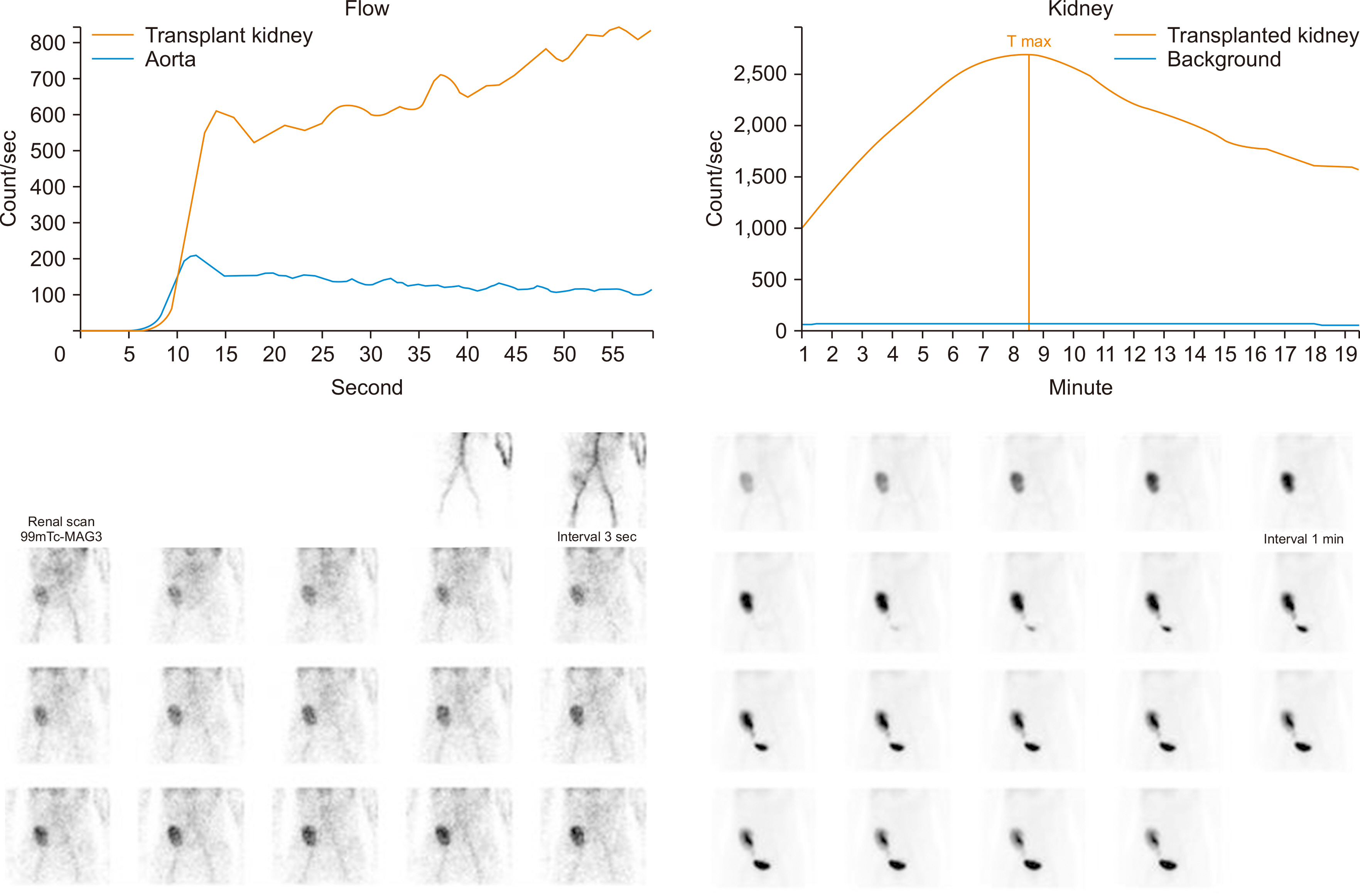
Fig. 1 Possible acute partial obstruction on a renal scan. The perfusion and uptake of the transplanted kidney are mildly decreased, and there is activity migrating to the bladder seen in the 6–7-minutes images. Additionally, there is mild pelvocalyceal and parenchymal retention activity.
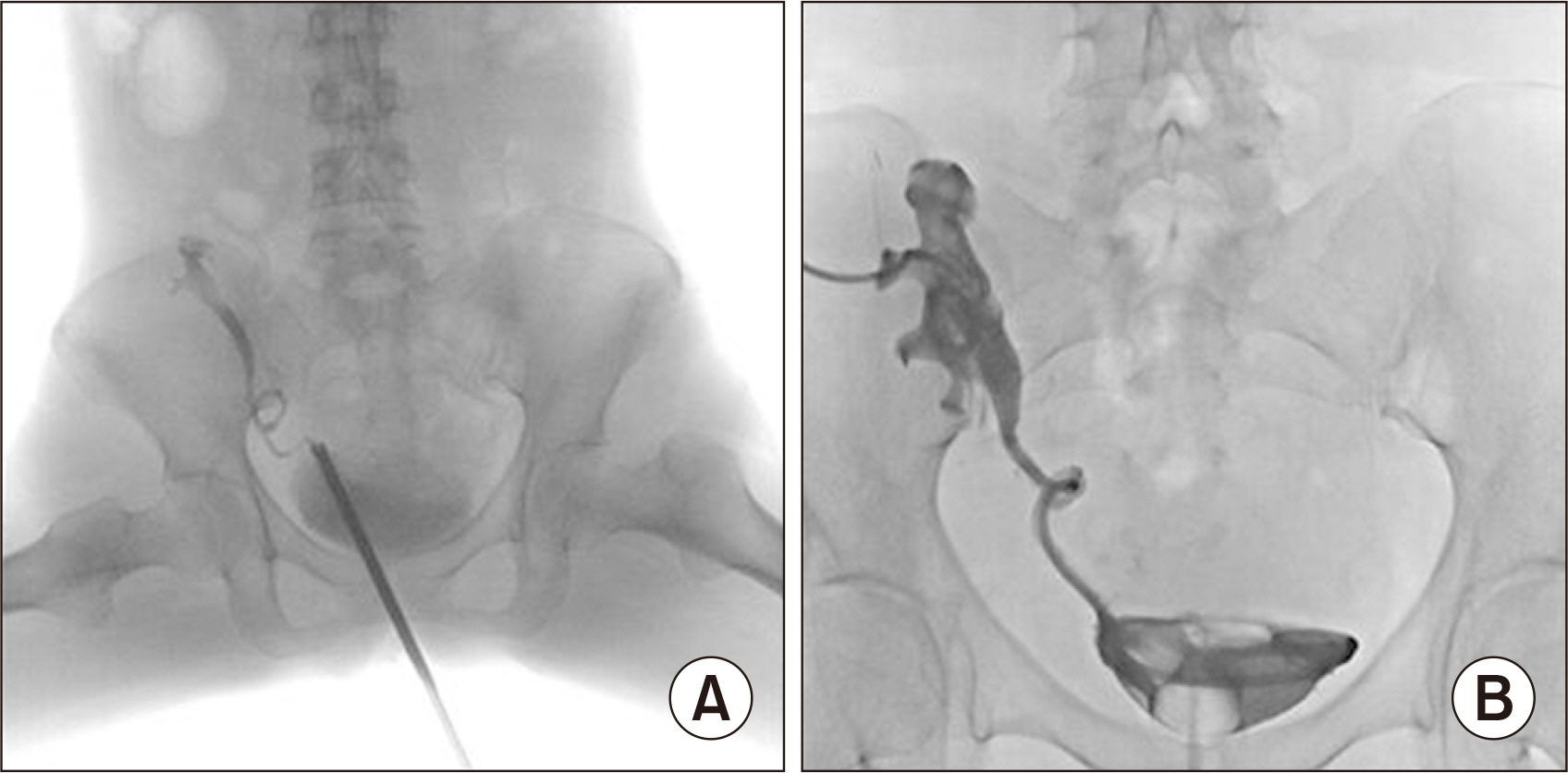
Fig. 2 (A) Ureteral kinking confirmed on retrograde pyelography. (B) Percutaneous nephrostomy and anterograde double-J stent insertion.
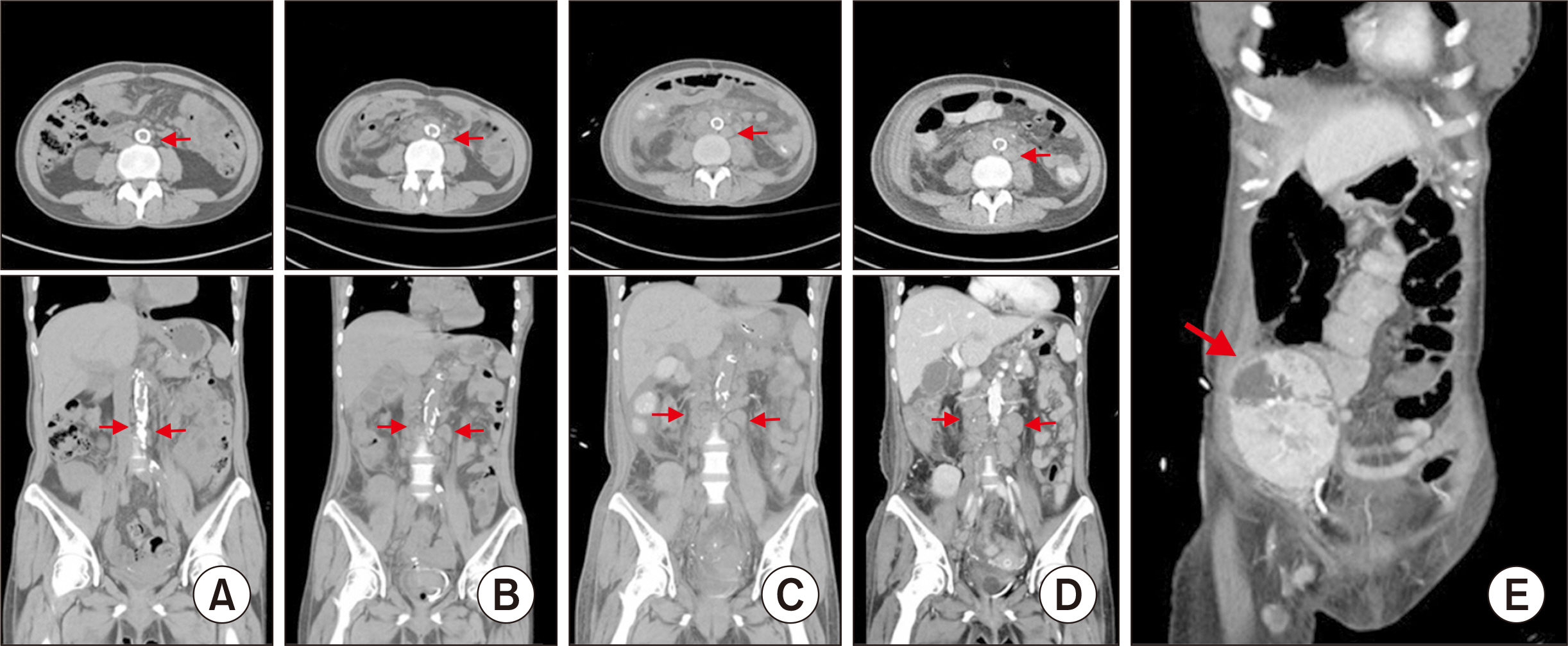
Fig. 3 Axial and coronal view of a noncontrast abdominopelvic computed tomography (CT) scan showing multiple lymphoproliferative lesions at (A) 12 weeks, (B) 17 weeks, and (C) 18 weeks after transplant. Contrast abdominopelvic CT scan showing (D) enlarged lymphoproliferative lesions and (E) necrosis in the allograft (arrows) at 19 weeks after transplant.
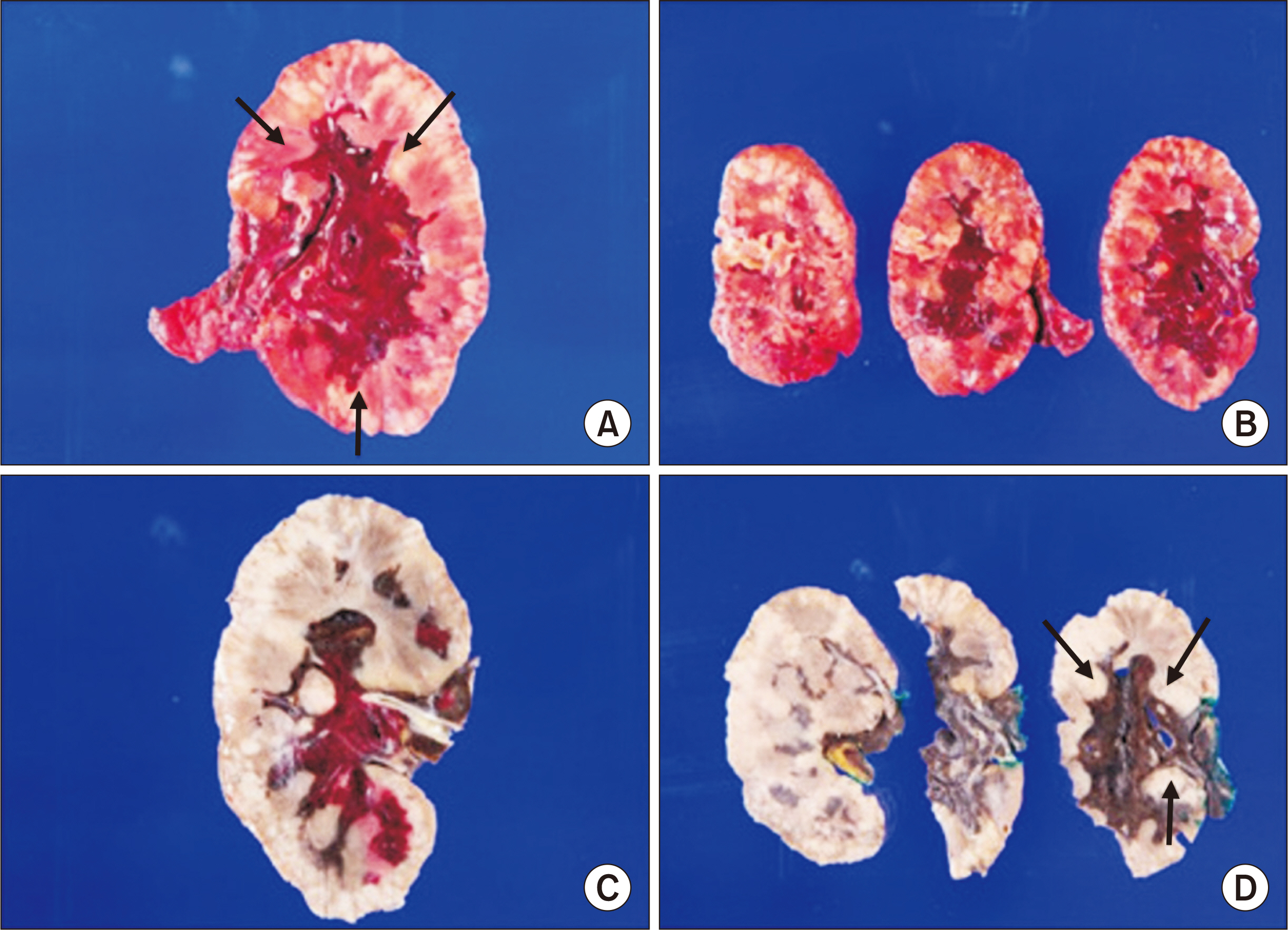
Fig. 4 Macroscopic findings of renal allograft after graftectomy. (A, B) An infiltrative hemorrhagic mass (8.6 × 5.5 × 3.6 cm; arrows) in the renal parenchyma and severe hemorrhagic findings were identified in the renal parenchyma (fresh specimen). (C, D) Involvement of the renal pelvis (arrows) from the renal sinus was identified (formalin-fixed specimen).
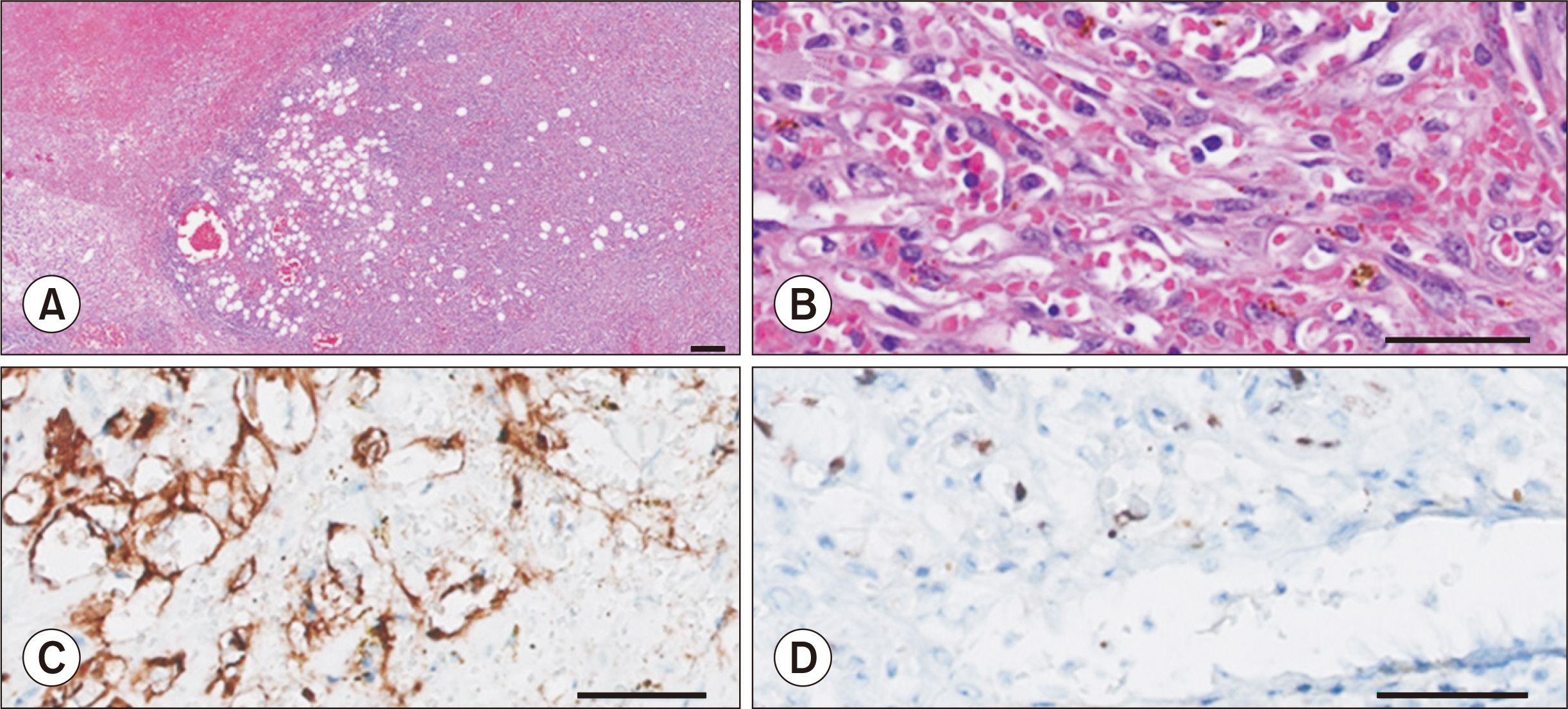
Fig. 5 Histological findings of renal allograft after graftectomy. (A) High cellular appearance in an invasive tumor nodule-like lesion (H&E, ×50). (B) Proliferation of spindle cells with a slit-like vascular space containing erythrocytes (H&E, ×400). (C) CD31 staining of spindled tumor cells (×400). (D) The spindle cells were positive for human herpesvirus 8 (immunohistochemistry human herpsevirus 8 stain, ×400).

Fig. 6 Histological findings of resected lymphoproliferative lesions. (A) Cellular spindle cell proliferation with the extravasation of numerous erythrocytes (H&E, ×400). (B) The spindle cells were positive for human herpesvirus 8 (immunohistochemistry human herpsevirus 8 stain, ×400).
Reference
-
1. Stallone G, Schena A, Infante B, Di Paolo S, Loverre A, Maggio G, et al. 2005; Sirolimus for Kaposi's sarcoma in renal-transplant recipients. N Engl J Med. 352:1317–23. DOI: 10.1056/NEJMoa042831. PMID: 15800227.
Article2. Lebbé C, Euvrard S, Barrou B, Pouteil-Noble C, Garnier JL, Glotz D, et al. 2006; Sirolimus conversion for patients with posttransplant Kaposi's sarcoma. Am J Transplant. 6:2164–8. DOI: 10.1111/j.1600-6143.2006.01412.x. PMID: 16780549.
Article3. Barete S, Calvez V, Mouquet C, Barrou B, Kreis H, Dantal J, et al. 2000; Clinical features and contribution of virological findings to the management of Kaposi sarcoma in organ-allograft recipients. Arch Dermatol. 136:1452–8. DOI: 10.1001/archderm.136.12.1452. PMID: 11115155.
Article4. Harwood AR, Osoba D, Hofstader SL, Goldstein MB, Cardella CJ, Holecek MJ, et al. 1979; Kaposi's sarcoma in recipients of renal transplants. Am J Med. 67:759–65. DOI: 10.1016/0002-9343(79)90731-9. PMID: 159624.
Article5. Kim B, Kang M, Kim Y, Lee HS, Kim B, Lee JJ, et al. 2021; De novo cancer incidence after kidney transplantation in South Korea from 2002 to 2017. J Clin Med. 10:3530. DOI: 10.3390/jcm10163530. PMID: 34441826. PMCID: PMC8396914.
Article6. Donia AF, Fouda MA, Ghoneim ME, Refaie AF, Ali-El-Dein B. 2021; The previously common post-kidney transplant Kaposi sarcoma has become non-existent for a decade: an Egyptian experience. J Cancer Res Clin Oncol. 147:1493–8. DOI: 10.1007/s00432-020-03433-1. PMID: 33130940.
Article7. Dollard SC, Butler LM, Jones AM, Mermin JH, Chidzonga M, Chipato T, et al. 2010; Substantial regional differences in human herpesvirus 8 seroprevalence in sub-Saharan Africa: insights on the origin of the "Kaposi's sarcoma belt". Int J Cancer. 127:2395–401. DOI: 10.1002/ijc.25235. PMID: 20143397. PMCID: PMC2895015.
Article8. Cesarman E, Damania B, Krown SE, Martin J, Bower M, Whitby D. 2019; Kaposi sarcoma. Nat Rev Dis Primers. 5:9. DOI: 10.1038/s41572-019-0060-9. PMID: 30705286. PMCID: PMC6685213.
Article9. Singh N. 2000; Human herpesviruses-6, -7 and -8 in organ transplant recipients. Clin Microbiol Infect. 6:453–9. DOI: 10.1046/j.1469-0691.2000.00129.x. PMID: 11168178.
Article10. Whitby D, Luppi M, Barozzi P, Boshoff C, Weiss RA, Torelli G. 1998; Human herpesvirus 8 seroprevalence in blood donors and lymphoma patients from different regions of Italy. J Natl Cancer Inst. 90:395–7. DOI: 10.1093/jnci/90.5.395. PMID: 9498490.
Article11. Anderson MA, Ying T, Wyburn K, Ferguson PM, Strach MC, Grimison P, et al. 2021; Transplant-associated penile Kaposi sarcoma managed with single agent paclitaxel chemotherapy: a case report. BMC Urol. 21:87. DOI: 10.1186/s12894-021-00855-y. PMID: 34098936. PMCID: PMC8186205.
Article12. Butkus DE, Kirchner KA, Neill J, Raju S. 1989; Kaposi's sarcoma in a transplanted kidney. Transplantation. 48:146–9. DOI: 10.1097/00007890-198907000-00034. PMID: 2665220.
Article13. Diaz-Candamio MJ, Pombo F, Lorenzo MJ, Alonso A. 1998; Kaposi's sarcoma involving a transplanted kidney: CT findings. AJR Am J Roentgenol. 171:1073–4. DOI: 10.2214/ajr.171.4.9762999. PMID: 9762999.
Article14. Rha SE, Byun JY, Kim HH, Baek JH, Hwang TK, Kang SJ. 2000; Kaposi's sarcoma involving a transplanted kidney, ureter and urinary bladder: ultrasound and CT findings. Br J Radiol. 73:1221–3. DOI: 10.1259/bjr.73.875.11144804. PMID: 11144804.
Article15. Delyon J, Rabate C, Euvrard S, Harwood CA, Proby C, Güleç AT, et al. 2019; Management of Kaposi sarcoma after solid organ transplantation: a European retrospective study. J Am Acad Dermatol. 81:448–55. DOI: 10.1016/j.jaad.2019.03.028. PMID: 30902727.
Article
- Full Text Links
-
- Actions
-
Cited
- CITED
-
- Close
- Share
-
- Similar articles
-
- Hepatic Kaposi Sarcoma after Kidney Transplantation: A Case Report
- Intragraft Kaposi’s sarcoma after kidney transplantation: a case report
- A Case of Recurrent Kaposi's Sarcoma after Cyclosporine Treatment in Kidney Transplantation Patient
- Kaposi's sarcoma of the oral cavity in renal transplanted patient; a case report
- Intrathoracic Kaposi's Sarcoma in Renal Transplant Recipient proven by Open Lung Biospsy: A Case Report


