
Ascorbic Acid Enhances Nitric Oxide Production in Trabecular Meshwork Cells
- Affiliations
-
- 1Department of Ophthalmology, Catholic University of Daegu College of Medicine, Daegu, Korea. jwkim@cu.ac.kr
- KMID: 754429
- DOI: http://doi.org/10.3341/kjo.2005.19.3.227
Abstract
- PURPOSE
This study investigated the role of ascorbic acid on the production of nitric oxide (NO) in the trabecular meshwork (TM) cells. METHODS: After primarily cultured human TM cells were exposed to 1, 10, and 100 micrometer of L-ascorbic acid (LAA), with or without co-administration of 1 mM sodium nitroprusside or 100 micrometer hydrogen peroxide for 48 hr, cellular survival and NO production were measured with MTT and Griess assay, respectively. RESULTS: LAA significantly potentiated NO production in a dose-dependent manner (p< 0.05) without affecting cell viability. LAA increased cell viability after hydrogen peroxide-induced oxidative stress in a dose-dependent manner. LAA enhanced NO production in TM cells and showed a cytoprotective effect against hydrogen peroxide-induced oxidative stress. CONCLUSIONS: LAA might be involved in the regulation of trabecular outflow by enhancing NO production in TM cells.
MeSH Terms
Figure
-
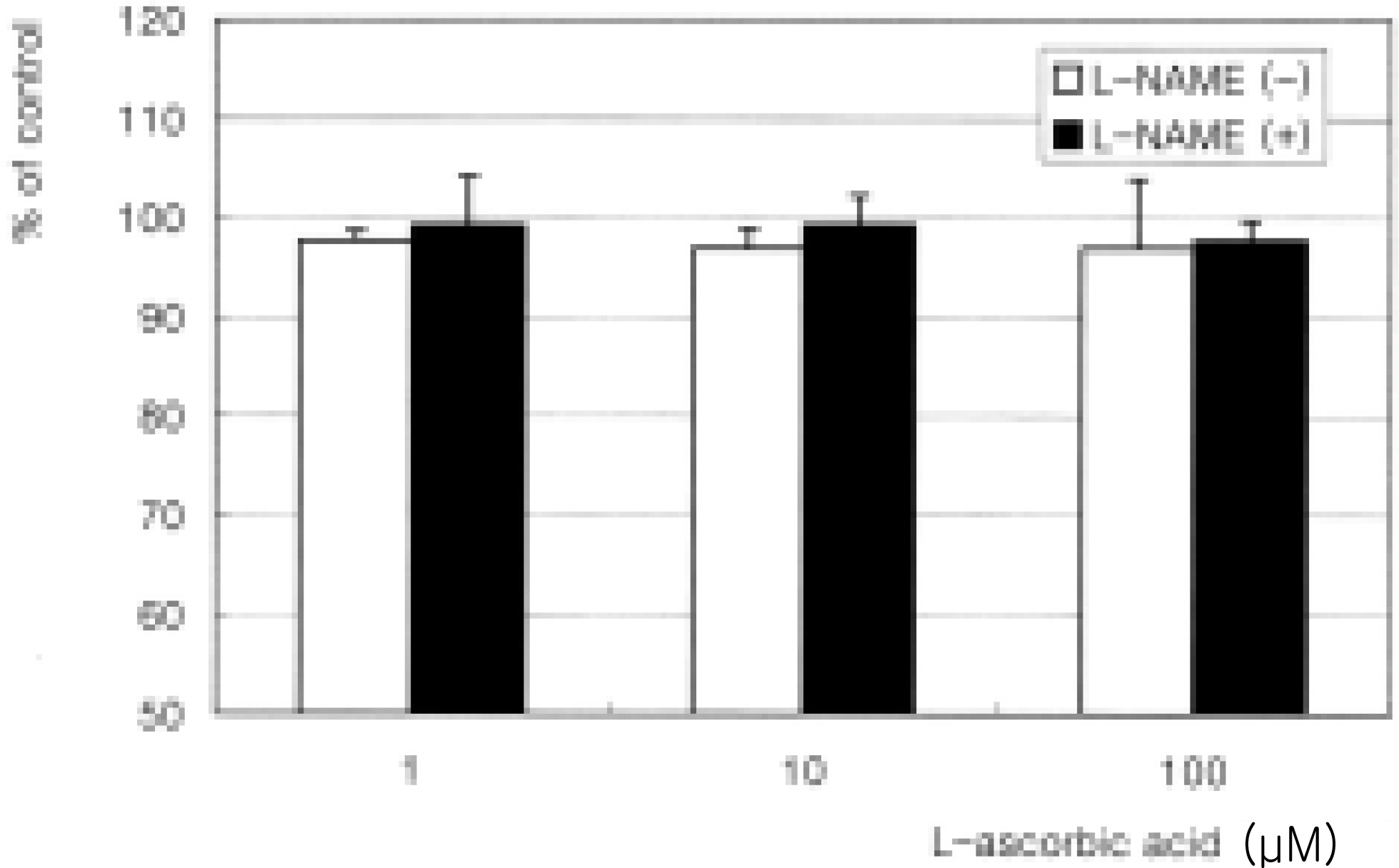
Fig. 1. Effect Of L-ascorbic acid on the viability of cultured trabecular meshwork cells. L—ascorbic acid does not affect significantly on the Viability of trabecular meshwork cells up to 100 uM
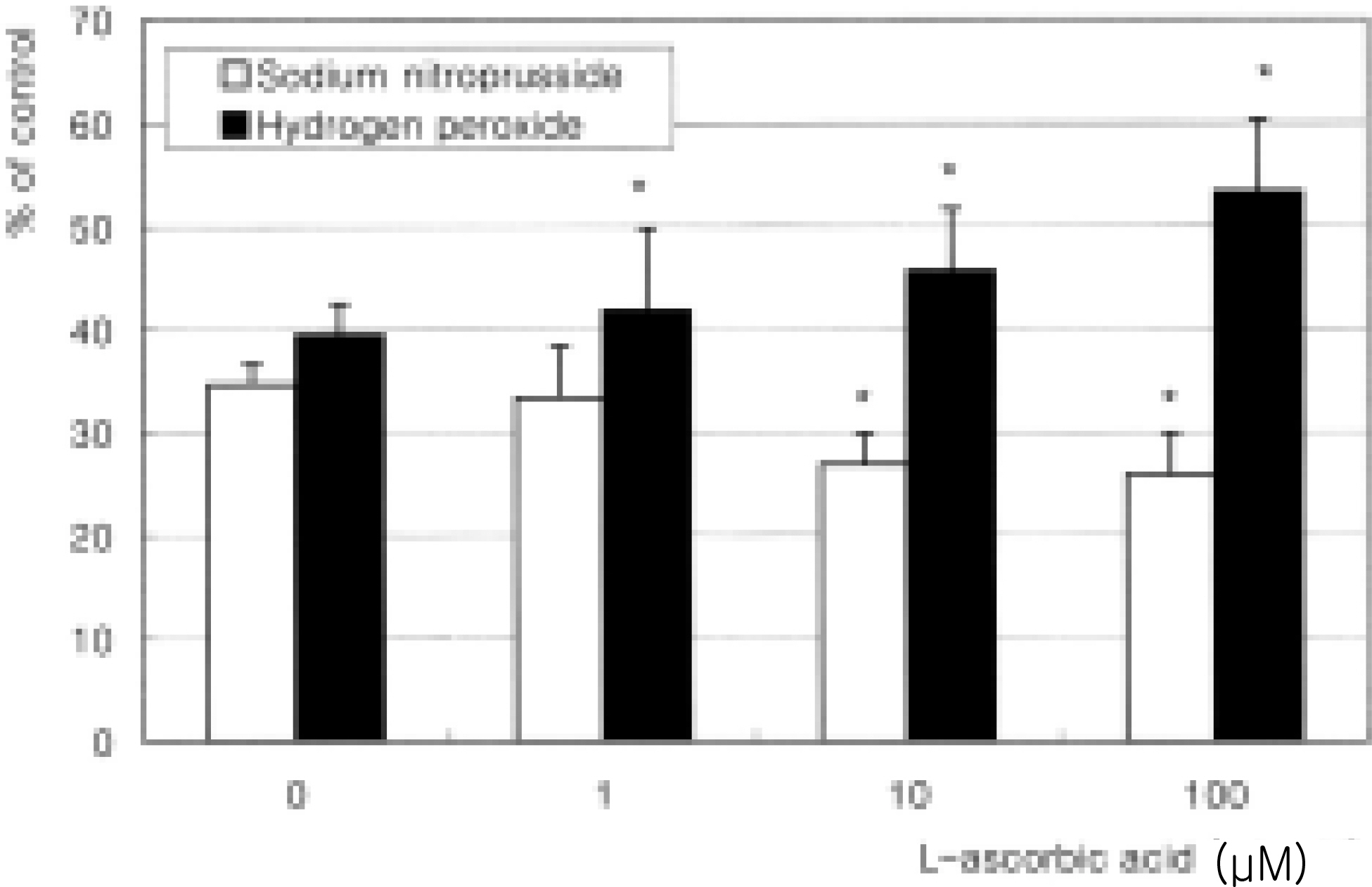
Fig. 2. Effect of 3 mM sodium nitroprusside and 1 mM hydrogen peroxide on the survival of cultured trabecular meshwork cells (∗p<0.05).
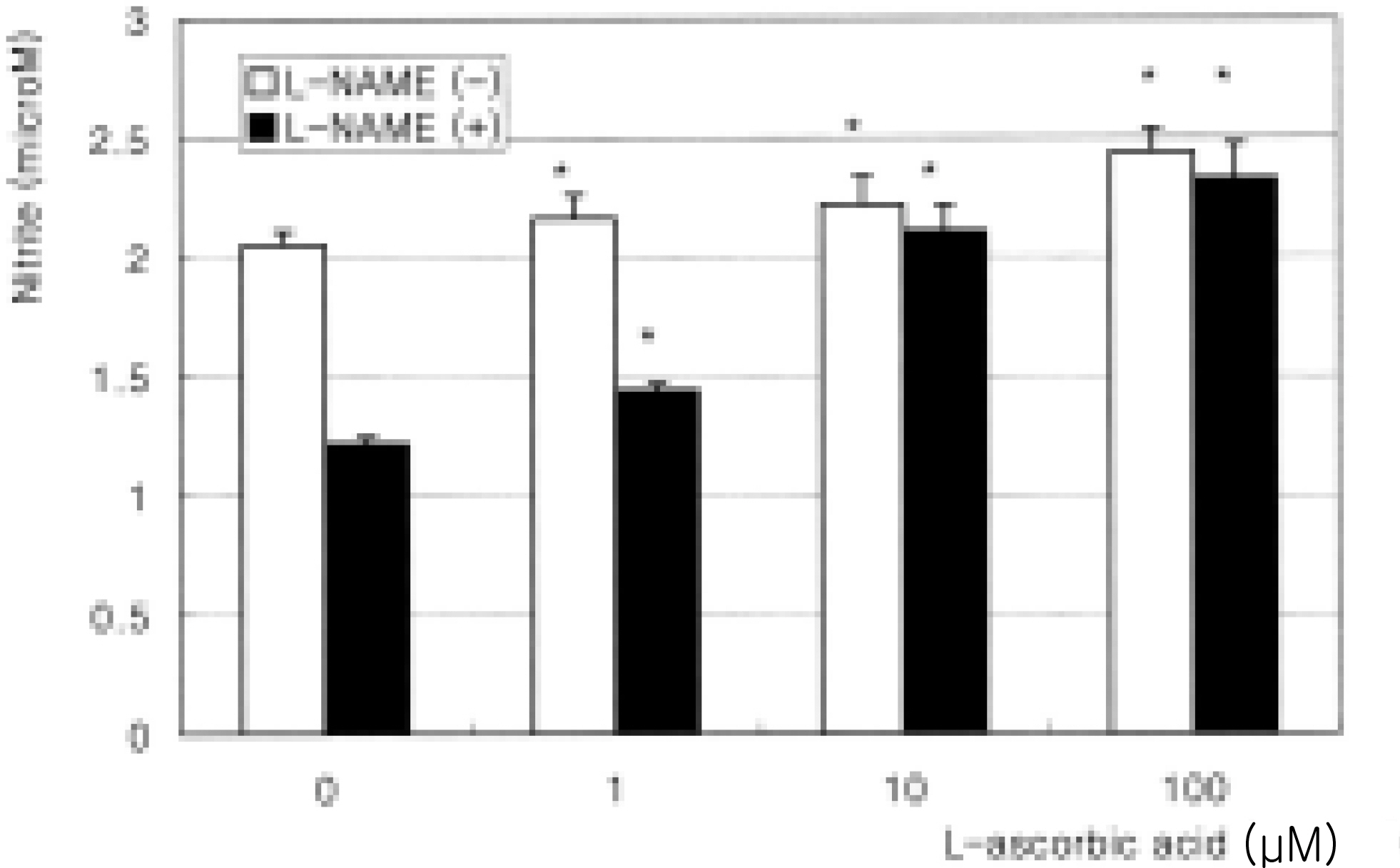
Fig. 3. Effect of L—ascorbic acid on the production of nitrite in cultured trabecular meshwork cells. L—ascorbic acid potentiate nitrate production significantly in a dose-dependent manner and L—NAME inhibited nitrite production significantly (∗p<0.05).
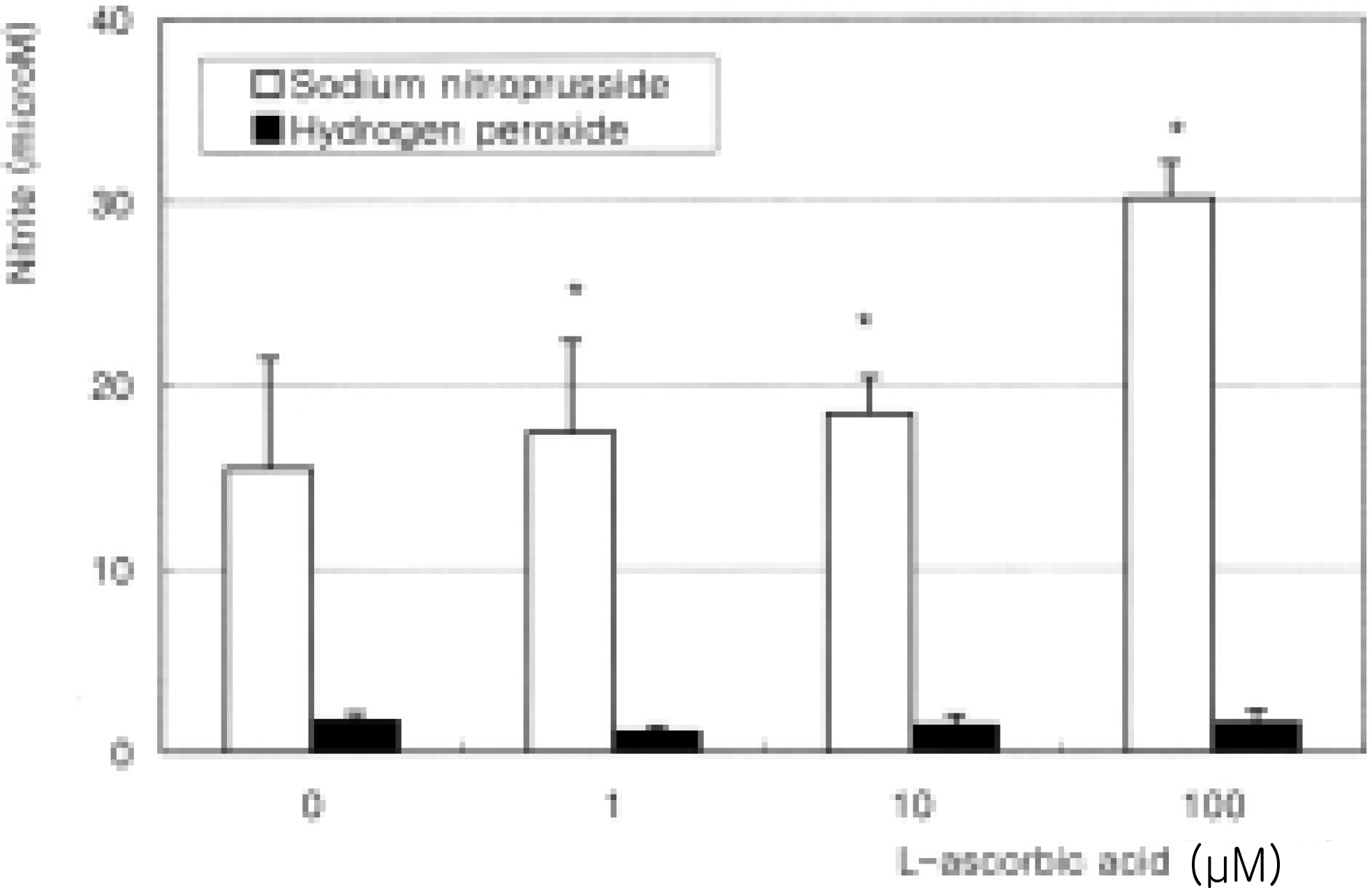
Fig. 4. Effect of L—ascorbic acid on the production of nitric oxide exposed to 3 mM sodium nitroprusside and 1 mM hydrogen peroxide in Cultured trabecular meshwork cells (∗p<0.05).
Cited by 1 articles
-
Effect of Ascorbic Acid Against the Oxidative Stress-Induced Cellular Senescence in Trabecular Meshwork Cells
Jae Woo Kim, Sun Hee Kang, Keun Woo Lee
J Korean Ophthalmol Soc. 2013;54(3):490-495. doi: 10.3341/jkos.2013.54.3.490.
Reference
-
1. Moncada S, Palmer RMJ, Higgs EA. Nitric oxide: physiology, pathophysiology, and pharmacology. Pharmacol Rev. 1991; 43:109–42.2. Bredt DS, Snyder SH. Nitric oxide: a physiologic messenger molecule. Annu Rev Biochem. 1994; 63:175–95.
Article3. Becquet F, Courtois Y, Goureau O. Nitric oxide in the eye: multifaceted roles and diverse outcomes. Surv Ophthalmol. 1997; 42:71–82.
Article4. Nathanson JA, McKee M. Identification of an extensive system of nitric oxide-producing cells in the ciliary muscle and outflow pathway. Invest Ophthalmol Vis Sci. 1995; 36:1765–73.5. Geyer O, Podos SM, Mittag T. Nitric oxide synthase activity in tissues of the bovine eyes. Graefe Arch Clin Exp Ophthalmol. 1997; 235:786–93.6. Meyer P, Champion C, Schlotzer-Schrehardt U, et al. Localization of nitric oxide synthase isoforms in porcine ocular tissues. Curr Eye Res. 1999; 18:375–80.
Article7. Schuman JS, Erickson K, Nathanson JA. Nitrovasodilator effects on intraocular pressure and ocular facility in monkeys. Exp Eye Res. 1994; 58:99–105.8. Wana RF, Podos SM. Effect of the topical application of nitroglycerin on intraocular pressure in normal and glaucomatous monkeys. Exp Eye Res. 1995; 60:337–9.9. Nathanson JA, McKee M. Alteration of ocular nitric oxide synthase in human glaucoma. Invest Ophthalmol Vis Sci. 1995; 36:1774–84.10. Matsuo T. Basic nitric oxide production is enhanced by hydraulic pressure in cultured human trabecular cells. Br J Ophthalmol. 2000; 84:631–5.11. Becker B. Chemical composition of human aqueous humor. Effects of acetazolamide. Arch Ophthalmol. 1957; 57:793–800.12. Erb C, Nau-Staudt K, Flammer J, Nau W. Ascorbic acid as a free radical scavenger in porcine and bovine aqueous humour. Ophthalmic Res. 2004; 36:38–42.
Article13. Heller R, Munscher-Pailug F, Grabner R, Till U. L-ascorbic acid potentiates nitric oxide synthesis in endothelial cells. J Biol Chem. 1999; 274:8254–60.
Article14. May JM. How does ascorbic acid prevent endothelial dysfunction? Free Radic Biol Med. 2000; 28:1421–9.
Article15. Ross R. Atherosclerosis-an inflammatory disease. N Eng J Med. 1999; 340:115–26.16. Blosi MS. Antioxidant determinations by the use of a stable free radical. Nature. 1958; 181:1199–200.
Article17. Polansky JR, Weinreb RN, Baxter JD, Alvarado J. Human trabecular cells. I. Establishment in tissue culture and growth characteristics. Invest Ophthalmol Vis Sci. 1979; 18:1043–9.18. Polansky JR, Wood IS, Maglio MT, Alvarado JA. Trabecular meshwork cell culture in glaucoma research: Evaluation of biological activity and structural properties of human trabecular meshwork cells in vitro. Ophthalmology. 1984; 91:580–95.19. Kahler CM, Heroid M, Reinisch N, Wiedermann CJ. Interaction of substance P with epidermal growth factor and fibroblast growth factor in cyclooxygenase-dependent proliferation of human skin fibroblasts. J Cell Physiol. 1996; 166:601–8.20. Gomm JJ, Coope RC, Browne PJ, Coombes RC. Separated human breast epithelial and myoepithelial cells have different growth factor requirements in vitro but can reconstitute normal breast lobuloalveolar structure. J Cell Physiol. 1997; 171:11–9.
Article21. Green LC, Wagner DA, Glogowski J, et al. Analysis of Nitrate, Nitrite and [15N]Nitrate in biologic fluids. Analytical Biochem. 1982; 126:131–8.22. Harris IJ. Chemical test for vitamin C, and the reducing substances present in tumor and other tissues. Nature. 1933; 132:27–8.23. Heath H. The distribution and possible function of ascorbic acid in the eye. Exp Eye Res. 1962; 1:362–7.24. Reiss GR. Ascorbic acid levels in the aqueous humor of nocturnal and diurnal mammals. Arch Ophthalmol. 1986; 104:753–5.
Article25. Reddy VN, Giblin FJ, Lin L-R, Chakrapani B. The effect of aqueous humor ascorbate on ultraviolet-B-induced DNA damage in lens epithelium. Invest Ophthalmol Vis Sci. 1998; 39:344–50.26. Huang A, Vita JA, Venema RC, Keaney Jr JF. Ascorbic acid enhances endothelial nitric-oxide synthase activity by increasing intracellular tetrahydrobiopterin. J Biol Chem. 2000; 275:17399–496.
Article27. Heller R, Unbehaun A, Schnellenberg B, et al. L-ascorbic acid potentiates endothelial nitric oxide synthesis via a chemical stabilization of tetrahydrobiopterin. J Biol Chem. 2001; 276:40–7.
Article28. Higginbotham EJ, Yue BYJT, Crean E, Peace J. Effects of ascorbic acid on trabecular meshwork cells in culture. Exp Eye Res. 1988; 46:507–16.
Article29. Yue BYJT, Higginbotham EJ, Chang IL. Ascorbic acid modulates the production of fibronectin and laminin by cells from an eye tissue-trabecular meshwork. Exp Cell Res. 1990; 187:65–8.
Article30. Sawaguchi S, Yue BYJT, Chang IL, et al. Ascorbic acid modulates collagen type I gene expression by cells from an eye tissue-trabecular meshwork. Cell Mol Biol. 1992; 38:587–604.31. Chiou GCY. Review: effects of nitric oxide on eye disease and their treatment. J Ocul Pharmacol Ther. 2001; 17:189–98.32. Lee PF, Lam KW, Lai MM. Aqueous humor ascorbate concentration and open angle glaucoma. Arch Ophthalmol. 1977; 95:308–10.33. Fong D, Etzel K, Lee PF, et al. Factors affecting ascorbate oxidation in aqueous humor. Curr Eye Res. 1987; 6:357–61.
Article34. Becker B. Topical 8-bromo-cyclic GMP lowers intraocular pressure. Invest Ophthalmol Vis Sci. 1990; 31:1647–9.35. Nathanson JA. Nitrovasodilators as a new class of ocular hypotensive agents. J Pharmacol Exp Ther. 1991; 260:956–65.36. Wiederholt M, Sturm A, Lepple-Wienhues A. Relaxation of trabecular meshwork and ciliary muscle by release of nitric oxide. Invest Ophthalmol Vis Sci. 1994; 35:2515–20.37. Francine FB-C. Oliver G, Francois D'H, Yves C. Decreased intraocular pressure induced by nitric oxide donors is correlated to nitrite production in the rabbit eye. Invest Ophthalmol Vis Sci. 1996; 37:1711–5.38. Kojima S, Sugiyama T, Shimizu K, et al. Effect of a nitric oxide donor on intraocular pressure. J Jpn Ophthalmol Soc. 1996; 100:181–6.39. Millar J. The nitric oxide/ascorbate cycle: how neurons may control their own oxygen supply. Med Hypotheses. 1995; 45:21–6.40. Ignarro LJ, Fukuto JM, Griscavage JM, et al. Oxidation of nitric oxide in aqueous solution to nitrite but not nitrate: comparison with enzymatically formed nitric oxide from L-arginine. Proc Natl Acad Sci USA. 1993; 90:8103–7.
Article41. Linner E. The effect of ascorbic acid on intraocular pressure. Paterson G, Miller SJH, Paterson GD, editors. Drug mechanisms in glaucoma. London: J & A Churchill;2006. p. 153–64.42. Jampel HD, Moon JI, Quigley HA, et al. Aqueous humor uric acid and ascorbic acid concentrations and outcome of trabeculectomy. Arch Ophthalmol. 1998; 116:281–5.
Article43. Kang JH, Pasquale LR, Willett W, et al. Antioxidant intake and primary open-angle glaucoma: A prospective study. Am J Epidemiol. 2003; 158:337–46.
Article44. Lipton SA, Choi YB, Sucher NJ, Chen HS. Neuroprotective versus neurodestructive effects of NO-related species. Biofactors. 1998; 8:33–40.
Article45. Kim YM, Bombeck CA, Billiar TR. Nitric oxide as a bifunctional regulator of apoptosis. Circ Res. 1999; 84:253–6.
Article46. Jampel HD. Ascorbic acid is cytotoxic to dividing human Tenon's capsule fibroblasts: A possible contributing factor in glaucoma filtration surgery success. Arch Ophthalmol. 1990; 108:1323–5.47. Denk PO, Knorr M. In vitro effect of ascorbic acid on the proliferation of bovine scleral and Tenon's capsule fibroblasts. Eur J Ophthalmol. 1998; 8:37–41.
Article48. Bohmer JA, Sellhaus B, Schrage NF. Effects of ascorbic acid on retinal pigment epithelial cells. Curr Eye Res. 2001; 23:206–14.49. Pirie A. A light-catalyzed reaction in the aqueous humor of the eye. Nature. 1965; 205:500–1.50. Tamm ER, Russell P, Johnson DH, Piatigorsky J. Human and monkey trabecular meshwork accumulate (B-crystalline in response to heat shock and oxidative stress. Invest Ophthalmol Vis Sci. 1996; 37:2402–13.
- Full Text Links
-
- Actions
-
Cited
- CITED
-
- Close
- Share
-
- Similar articles
-
- Effect of Dexamethasone on the Production of Nitric Oxide in Trabecular Meshwork Cells
- Role of Ascorbic Acid Against the Oxidative Stress in Trabecular Meshwork Cells
- Effect of Mitomycin C on the Proliferation and Nitric Oxide Production in the Cultured Trabecular Meshwork Cells
- Effect of Ascorbic Acid Against the Oxidative Stress-Induced Cellular Senescence in Trabecular Meshwork Cells
- Insulin Enhances Nitric Oxide Production in Trabecular Meshwork Cells via De Novo Pathway for Tetrahydrobiopterin Synthesis


