
Int J Stem Cells.
2020 Jul;13(2):177-181. 10.15283/ijsc20069.
Regenerative Therapy for Osteoarthritis: A Perspective
- Affiliations
-
- 1Research Institute for Integrative Regenerative Biomedical Engineering, Dongguk University, Goyang, Korea
- KMID: 2504330
- DOI: http://doi.org/10.15283/ijsc20069
Abstract
- Osteoarthritis (OA) is the most common type of arthritis and causes a significant deterioration in patients’ quality of life. The high prevalence of OA as well as the current lack of disease-modifying drugs led to a rise in regenerative medicine efforts. The hope is that this will provide a treatment modality with the ability to alter the course of OA via structural modifications of damaged articular cartilage (AC). Regenerative therapy in OA starts with the concept that administered cells may engraft to a lesion site and differentiate into chondrocytes. However, recent studies show that cells, particularly when injected in suspension, rapidly undergo apoptosis after exerting a transient paracrine effect. If the injected stem cells do not lead to structural improvements of a diseased joint, the high cost of cell therapy for OA cannot be justified, particularly when compared with other injection therapeutics such as corticosteroids and hyaluronic acid. Long-term survival of implanted cells that offer prolonged paracrine effects or possible engraftment is essential for a successful cell therapy that will offer durable structural improvements. In this perspective review, the history and current status of regenerative therapy in OA are summarized along with the conceptual strategy and future directionsfor a successful regenerative therapy that can provide structural modifications in OA.
Figure
-
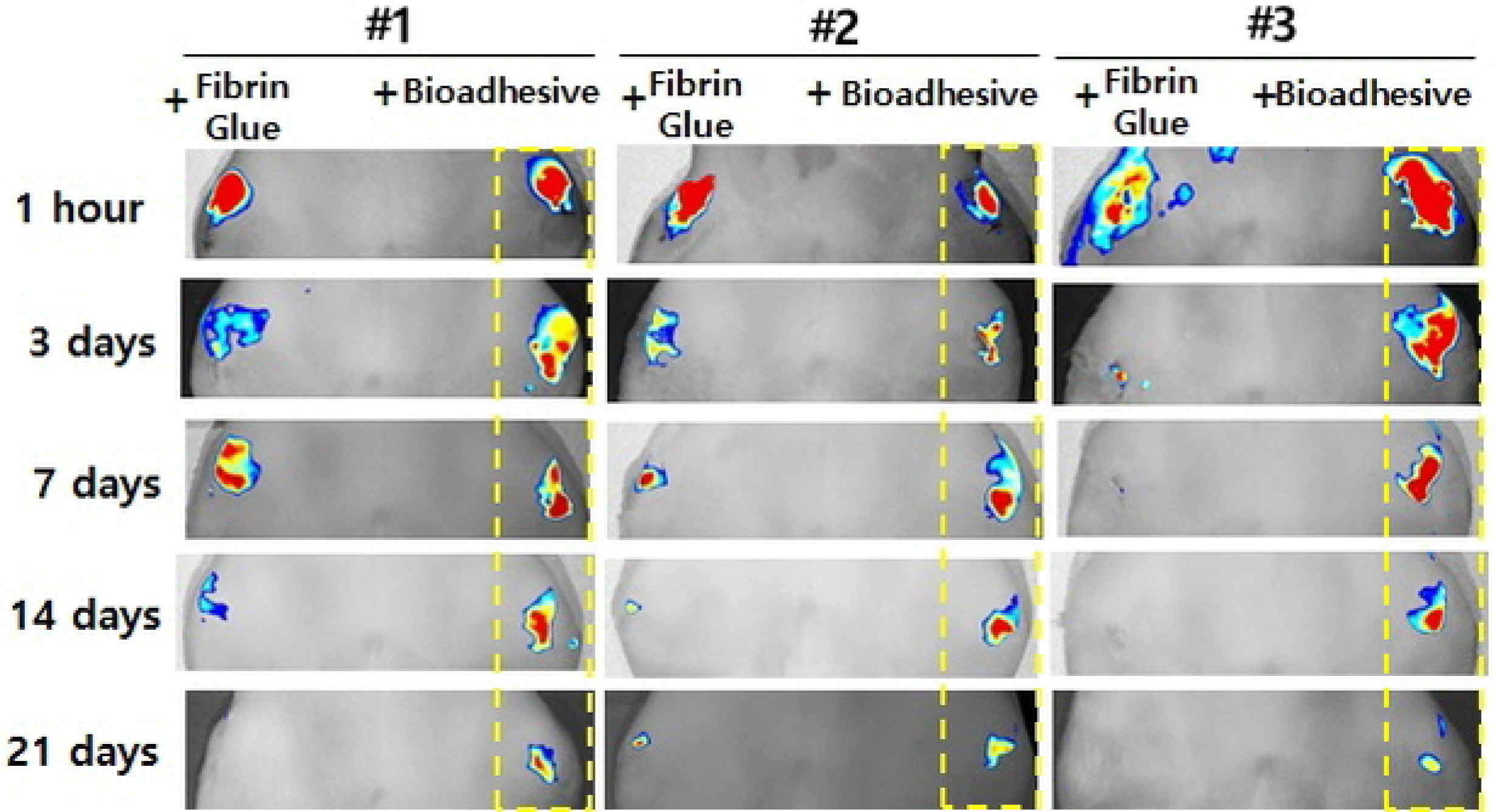
Fig. 1 Application of a bioadhesive (mussel adhesive protein) to a focal chondral defect on the rat patellar groove (right knee: 106 ASCs in fibrin glue left knee: 106 ASCs in bioadhesive).
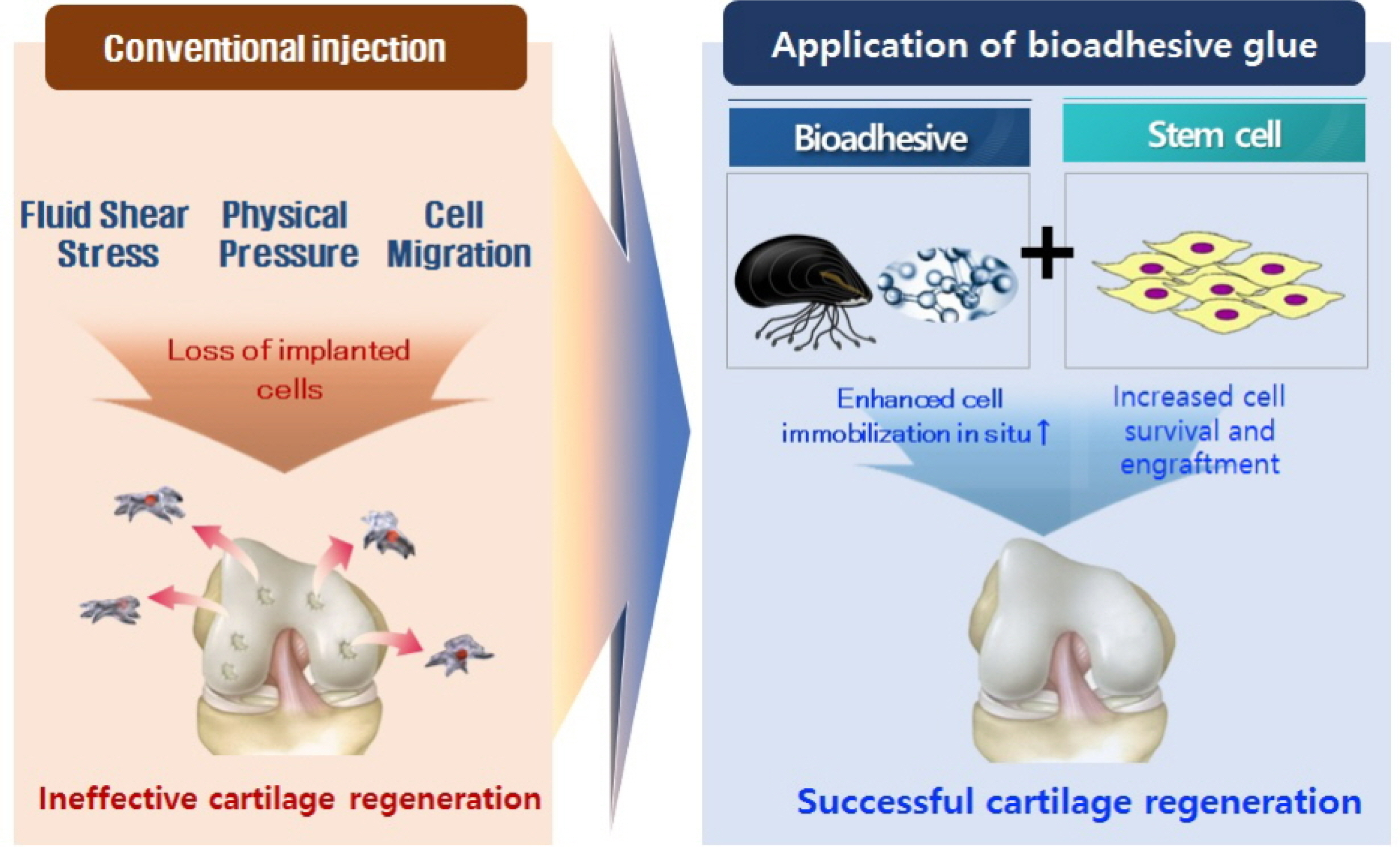
Fig. 2 Conceptual illustration of the use of bioadhesive materials to enhance stem cell survival and engraftment.
Reference
-
References
1. Im GI. 2019; Perspective on intra-articular injection cell therapy for osteoarthritis treatment. Tissue Eng Regen Med. 16:357–363. DOI: 10.1007/s13770-018-00176-6. PMID: 31413940. PMCID: PMC6675827.
Article2. Im GI. 2018; Tissue engineering in osteoarthritis: current status and prospect of mesenchymal stem cell therapy. BioDrugs. 32:183–192. DOI: 10.1007/s40259-018-0276-3. PMID: 29704190.
Article3. ter Huurne M, Schelbergen R, Blattes R, Blom A, de Munter W, Grevers LC, Jeanson J, Noël D, Casteilla L, Jorgensen C, van den Berg W, van Lent PL. 2012; Antiinflammatory and chondroprotective effects of intraarticular injection of adipose-derived stem cells in experimental osteoarthritis. Arthritis Rheum. 64:3604–3613. DOI: 10.1002/art.34626. PMID: 22961401.
Article4. von Bahr L, Batsis I, Moll G, Hägg M, Szakos A, Sundberg B, Uzunel M, Ringden O, Le Blanc K. 2012; Analysis of tissues following mesenchymal stromal cell therapy in humans indicates limited long-term engraftment and no ectopic tissue formation. Stem Cells. 30:1575–1578. DOI: 10.1002/stem.1118. PMID: 22553154.
Article5. Goldring MB, Goldring SR. 2010; Articular cartilage and subchondral bone in the pathogenesis of osteoarthritis. Ann N Y Acad Sci. 1192:230–237. DOI: 10.1111/j.1749-6632.2009.05240.x. PMID: 20392241.
Article6. Murray CJL, Lóez AD. 1996. The global burden of disease: a comprehensive assessment of mortality and disability from diseases, injuries, and risk factors in 1990 and projected to 2020. Harvard School of Public Health;Estados Unidos:7. Hochberg MC, Altman RD, April KT, Benkhalti M, Guyatt G, McGowan J, Towheed T, Welch V, Wells G, Tugwell P. American College of Rheumatology. 2012; 2012 recommendations for the use of nonpharmacologic and pharmacologic therapies in osteoarthritis of the hand, hip, and knee. Arthritis Care Res (Hoboken). 64:465–474. DOI: 10.1002/acr.21596. PMID: 22563589.
Article8. Jordan KM, Arden NK, Doherty M, Bannwarth B, Bijlsma JW, Dieppe P, Gunther K, Hauselmann H, Herrero-Beaumont G, Kaklamanis P, Lohmander S, Leeb B, Lequesne M, Mazieres B, Martin-Mola E, Pavelka K, Pendleton A, Punzi L, Serni U, Swoboda B, Verbruggen G, Zimmerman-Gorska I, Dougados M. Standing Committee for International Clinical Studies Including Therapeutic Trials ESCISIT. 2003; EULAR recommendations 2003: an evidence based approach to the management of knee osteoarthritis: report of a task force of the Standing Committeefor International Clinical Studies Including Therapeutic Trials (ESCISIT). Ann Rheum Dis. 62:1145–1155. DOI: 10.1136/ard.2003.011742. PMID: 14644851. PMCID: PMC1754382.9. White RH, Romano PS, Zhou H, Rodrigo J, Bargar W. 1998; Incidence and time course of thromboembolic outcomes following total hip or knee arthroplasty. Arch Intern Med. 158:1525–1531. DOI: 10.1001/archinte.158.14.1525. PMID: 9679793.
Article10. Kurtz SM, Lau E, Watson H, Schmier JK, Parvizi J. 2012; Economic burden of periprosthetic joint infection in the United States. J Arthroplasty. 27(8 Suppl):61–65.e1. DOI: 10.1016/j.arth.2012.02.022. PMID: 22554729.
Article11. Chang YH, Liu HW, Wu KC, Ding DC. 2016; Mesenchymal stem cells and their clinical applications in osteoarthritis. Cell Transplant. 25:937–950. DOI: 10.3727/096368915X690288. PMID: 26688464.
Article12. Im GI, Jung NH, Tae SK. 2006; Chondrogenic differentiation of mesenchymal stem cells isolated from patients in late adulthood: the optimal conditions of growth factors. Tissue Eng. 12:527–536. DOI: 10.1089/ten.2006.12.527. PMID: 16579686.
Article13. Kim HJ, Im GI. 2009; Chondrogenic differentiation of adipose tissue-derived mesenchymal stem cells: greater doses of growth factor are necessary. J Orthop Res. 27:612–619. DOI: 10.1002/jor.20766. PMID: 18985688.
Article14. Kim HJ, Im GI. 2009; Combination of transforming growth factor-beta2 and bone morphogenetic protein 7 enhances chondrogenesis from adipose tissue-derived mesenchymal stem cells. Tissue EngPart A. 15:1543–1551. DOI: 10.1089/ten.tea.2008.0368. PMID: 19072523.
Article15. Im GI, Kim HJ. 2011; Electroporation-mediated gene transfer of SOX trio to enhance chondrogenesis in adipose stem cells. Osteoarthritis Cartilage. 19:449–457. DOI: 10.1016/j.joca.2011.01.005. PMID: 21251990.
Article16. Kim YJ, Kim HJ, Im GI. 2008; PTHrP promotes chondrogenesisand suppresses hypertrophy from both bone marrow-derived and adipose tissue-derived MSCs. Biochem Biophys Res Commun. 373:104–108. DOI: 10.1016/j.bbrc.2008.05.183. PMID: 18554504.
Article17. Winter A, Breit S, Parsch D, Benz K, Steck E, Hauner H, Weber RM, Ewerbeck V, Richter W. 2003; Cartilage-like gene expression in differentiated human stem cell spheroids: a comparison of bone marrow-derived and adipose tissue-derived stromal cells. Arthritis Rheum. 48:418–429. DOI: 10.1002/art.10767. PMID: 12571852.
Article18. Mueller MB, Tuan RS. 2008; Functional characterization of hypertrophy in chondrogenesis of human mesenchymal stem cells. Arthritis Rheum. 58:1377–1388. DOI: 10.1002/art.23370. PMID: 18438858. PMCID: PMC3612425.
Article19. Behrendt P, Ladner Y, Stoddart MJ, Lippross S, Alini M, Eglin D, Armiento AR. 2020; Articular joint-simulating mechanical load activates endogenous TGF-β in a highly cellularized bioadhesive hydrogel for cartilage repair. Am J Sports Med. 48:210–221. DOI: 10.1177/0363546519887909. PMID: 31877102.
Article20. Fahy N, Alini M, Stoddart MJ. 2018; Mechanical stimulation of mesenchymal stem cells: implications for cartilage tissue engineering. J Orthop Res. 36:52–63. DOI: 10.1002/jor.23670. PMID: 28763118.
Article21. Murphy JM, Fink DJ, Hunziker EB, Barry FP. 2003; Stem cell therapy in a caprine model of osteoarthritis. Arthritis Rheum. 48:3464–3474. DOI: 10.1002/art.11365. PMID: 14673997.
Article22. Park YB, Ha CW, Lee CH, Yoon YC, Park YG. 2017; Cartilage regeneration in osteoarthritic patients by a composite of allogeneic umbilical cord blood-derived mesenchymal stem cells and hyaluronate hydrogel: results from a clinical trial for safety and proof-of-concept with 7 years of extended follow-up. Stem Cells Transl Med. 6:613–621. DOI: 10.5966/sctm.2016-0157. PMID: 28191757. PMCID: PMC5442809.
Article23. Kim MK, Ha CW, In Y, Cho SD, Choi ES, Ha JK, Lee JH, Yoo JD, Bin SI, Choi CH, Kyung HS, Lee MC. 2018; A multicenter, double-blind, phase III clinical trial to evaluate the efficacy and safety of a cell and gene therapy in knee osteoarthritis patients. Hum Gene Ther Clin Dev. 29:48–59. DOI: 10.1089/humc.2017.249. PMID: 29641281.
Article24. Milani P, Ambrosi G, Gammoh O, Blandini F, Cereda C. 2013; SOD1 and DJ-1 converge at Nrf2 pathway: a clue for antioxidant therapeutic potential in neurodegeneration. Oxid Med Cell Longev. 2013:836760. DOI: 10.1155/2013/836760. PMID: 23983902. PMCID: PMC3745953.
Article25. Lin TM, Tsai JL, Lin SD, Lai CS, Chang CC. 2005; Accelerated growth and prolonged lifespan of adipose tissue-derived human mesenchymal stem cells in a medium using reduced calcium and antioxidants. Stem Cells Dev. 14:92–102. DOI: 10.1089/scd.2005.14.92. PMID: 15725748.
Article26. Choi KM, Seo YK, Yoon HH, Song KY, Kwon SY, Lee HS, Park JK. 2008; Effect of ascorbic acid on bone marrow-derived mesenchymal stem cell proliferation and differentiation. J BiosciBioeng. 105:586–594. DOI: 10.1263/jbb.105.586. PMID: 18640597.
Article27. Gharibi B, Farzadi S, Ghuman M, Hughes FJ. 2014; Inhibition of Akt/mTOR attenuates age-related changes in mesenchymal stem cells. Stem Cells. 32:2256–2266. DOI: 10.1002/stem.1709. PMID: 24659476.
Article28. Xu J, Qian J, Xie X, Lin L, Zou Y, Fu M, Huang Z, Zhang G, Su Y, Ge J. 2012; High density lipoprotein protects mesenchymal stem cells from oxidative stress-induced apoptosis via activation of the PI3K/Akt pathway and suppression of reactive oxygen species. Int J Mol Sci. 13:17104–17120. DOI: 10.3390/ijms131217104. PMID: 23443132. PMCID: PMC3546741.
Article29. Turinetto V, Vitale E, Giachino C. 2016; Senescence in human mesenchymal stem cells: functional changes and implications in stem cell-based therapy. Int J Mol Sci. 17:E1164. DOI: 10.3390/ijms17071164. PMID: 27447618. PMCID: PMC4964536.
Article
- Full Text Links
-
- Actions
-
Cited
- CITED
-
- Close
- Share
-
- Similar articles
-
- Perspective on Intra-articular Injection Cell Therapy for Osteoarthritis Treatment
- Emerging Concepts of Endotypes/Phenotypes in Regenerative Medicine for Osteoarthritis
- Overcoming Current Dilemma in Cartilage Regeneration: Will Direct Conversion Provide a Breakthrough?
- Current Stem Cell Therapy for Osteoarthritis
- The Concept of Early Osteoarthritis and Its Significance in Regenerative Medicine


