
Korean J healthc assoc Infect Control Prev.
2019 Dec;24(2):88-96. 10.14192/kjicp.2019.24.2.88.
Role of Laboratory Medicine Doctors and the Rising Importance on the Infection Control of Medical Facilities

- Affiliations
-
- 1Department of Laboratory Medicine, Seoul National University College of Medicine, Seoul, Korea. jeannie@snu.ac.kr
- 2Department of Laboratory Medicine, Asan Medical Center, University of Ulsan College of Medicine, Seoul, Korea.
- 3Department of Laboratory Medicine and Research Institute of Bacterial Resistance, Yonsei University College of Medicine, Seoul, Korea.
- 4Department of Laboratory Medicine, Seoul National University Boramae Medical Center, Seoul, Korea.
- KMID: 2467908
- DOI: http://doi.org/10.14192/kjicp.2019.24.2.88
Abstract
- BACKGROUND
Public concern for healthcare-associated infections (HAIs) has been rising since the outbreak of the Middle East Respiratory Syndrome Coronavirus in Korea in 2015. HAI control has been an essential training curriculum for residents of laboratory medicine since 2007. This study aimed to investigate the role of the laboratory physician as an infection control doctor (ICD).
METHODS
In March 2017, email surveys were conducted with the directors of or clinical microbiologists at the Department of Laboratory Medicine of 75 secondary- or tertiary-care hospitals. They collected data about hospital characteristics, infection control committees and departments, and careers in infection control; there were a total of 74 valid responses (98.7%)
RESULTS
Fourteen of 38 teaching hospitals (36.8%) had an on-site resident training curriculum at the department of infection control. This increased to 11 of 26 hospitals (42.3%) where laboratory physicians were working as ICDs and 7 of 11 (63.7%) where the hospitals hosted more than 900 beds. A total of 51 of the hospitals (68.9%) had laboratory physicians as ICDs. Only nine of the other hospitals (39.1%) had enough ICDs of other specialties to meet the workforce standards for the infection control incentives; six (23.1%) had a shortage of laboratory physicians.
CONCLUSION
Laboratory physicians are major human resources of ICDs in the general hospitals; however, there is still a lack of laboratory physician ICDs in Korea. Therefore, on-site resident training curriculums for infection control should be implemented by all teaching hospitals.
MeSH Terms
Figure
-

Fig. 1 Workforce of infection control related doctors (n=74). Abbreviations: Lab., laboratory; CM, clinical microbiology; ID, infectious disease.
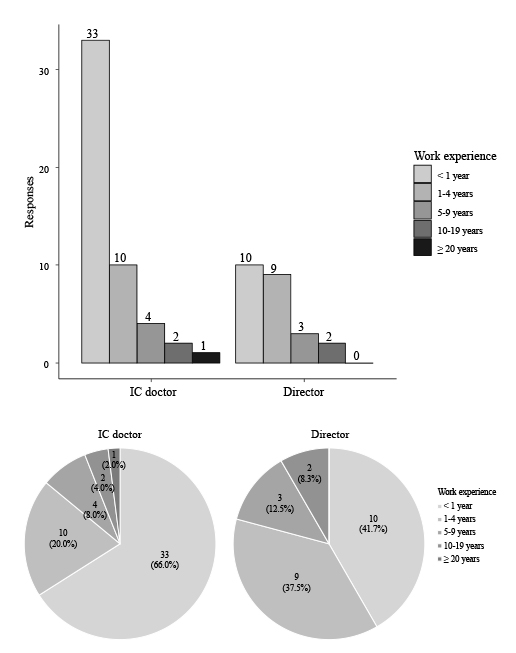
Fig. 2 Work experience of laboratory medicine doctors in the department of infection control. Abbreviation: IC, infection control.
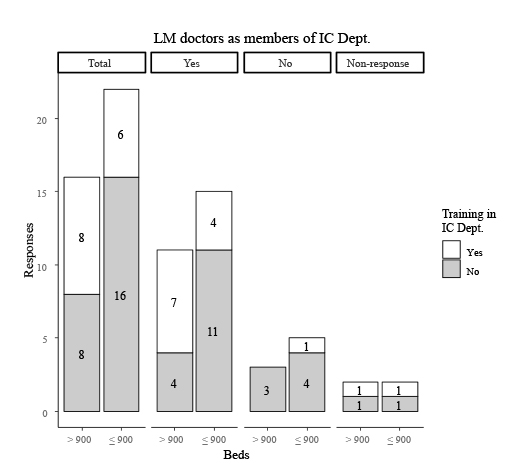
Fig. 3 The presence of resident training course in the department of infection control in teaching hospitals (n=38). Abbreviation: IC Dept., department of infection control.
Reference
-
1. Ministry of Health and Welfare. Enforcement Regulations of the Medical Service Act (Amendment). Decree No.: 442. Ministry of Health and Welfare;2016.2. Ministry of Health and Welfare. Details on the Criteria and Methods for Application of Benefit in Kind. Notice No.: 2016-152. Ministry of Health and Welfare;2016.3. Jarvis WR. Bennett & Brachman's hospital infections. 6th ed. Philadelphia: Wolters Kluwer Health;2015.4. Jorgensen JH, Pfaller MA, Carroll KC. American Society for Microbiology. Manual of clinical microbiology. 11th ed. Washington: ASM Press;2015.5. Haley RW, Culver DH, White JW, Morgan WM, Emori TG, Munn VP, et al. The efficacy of infection surveillance and control programs in preventing nosocomial infections in US hospitals. Am J Epidemiol. 1985; 121:182–205.
Article6. European Centre for Disease Prevention and Control. Core competencies for infection control and hospital hygiene professionals in the European Union. Stockholm: ECDC;2013.7. Dickstein Y, Nir-Paz R, Pulcini C, Cookson B, Beović B, Tacconelli E, et al. Staffing for infectious diseases, clinical microbiology and infection control in hospitals in 2015: results of an ESCMID member survey. Clin Microbiol Infect. 2016; 22:812.e9–812.e17.
Article8. Diekema DJ. Rising stakes for health care-associated infection prevention: implications for the clinical microbiology laboratory. J Clin Microbiol. 2017; 55:996–1001.
Article9. Morgan DJ, Malani P, Diekema DJ. Diagnostic stewardship-leveraging the laboratory to improve antimicrobial use. JAMA. 2017; 318:607–608.
Article10. Patel R. Diagnostic stewardship: opportunity for a laboratory-infectious diseases partnership. Clin Infect Dis. 2018; 67:799–801.
Article11. Rock C, Pana Z, Leekha S, Trexler P, Andonian J, Gadala A, et al. CDC Prevention Epicenters Program. National Healthcare Safety Network laboratory-identified Clostridium difficile event reporting: a need for diagnostic stewardship. Am J Infect Control. 2018; 46:456–458.
Article12. Arena F, Scolletta S, Marchetti L, Galano A, Maglioni E, Giani T, et al. Impact of a clinical microbiology-intensive care consulting program in a cardiothoracic intensive care unit. Am J Infect Control. 2015; 43:1018–1021.
Article13. Korean Society of Laboratory Medicine. Laboratory medicine residency training curriculum. 3rd ed. Anyang: Academya;2014.
- Full Text Links
-
- Actions
-
Cited
- CITED
-
- Close
- Share
-
- Similar articles
-
- Facilities and construction in hospitals for infection control
- Improvement of Infection Control System in Long-term Care Facilities after the Coronavirus Disease Outbreak
- Role of the Microbiology Laboratory in Infection Control
- A Survey on Elements of an Effective Hospital Infection Control Program for Korea
- Status of Infection Control and Educational Needs of Nurses in Long Term Care Facilities in Korea


