J Korean Med Assoc.
2004 May;47(5):473-478. 10.5124/jkma.2004.47.5.473.
Anti-viral Treatment of Chronic Hepatitis B
- Affiliations
-
- 1Department of Internal Medicine, Division of Gastroenterology, University of Ulsan College of Medicine, Asan medical Center, Korea. djsuh@amc.soul.kr
- KMID: 2137883
- DOI: http://doi.org/10.5124/jkma.2004.47.5.473
Abstract
- Patients with chronic hepatitis B virus (HBV) infection are at risk for development of liver cirrhosis and hepatocellular carcinoma. The goal of antiviral therapy for chronic hepatitis B is the permanent suppression of HBV replication; loss of HBV DNA and HBeAg seroconversion. Three antiviral drugsinterferon, lamivudine and adefovir dipivoxil-are avilable now. Although they were proven to have suppressive effects on HBV replication, their antiviral effects are not satisfactory yet and durability of response is low. Emergence of drug resistant mutants is troublesome in lamivudinr therapy. Expense of drugs is another problem for long-term antiviral treatment. Development of new drugs which have stronger and durable antiviral effects and combination therapy with several antiviral drugs to reduce drug resistant mutants are anticipated.
Keyword
MeSH Terms
Figure
-
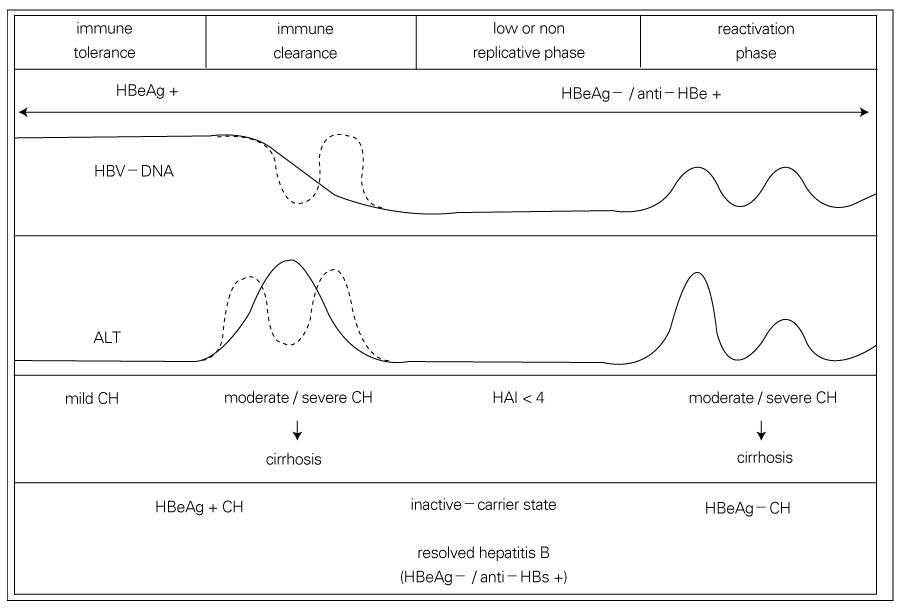
Figure 1
Reference
-
1. Lok AS, McMahon BJ. Chronic hepatitis B: update of recommendations. Hepatology. 2004. 39:857–861.
Article2. Conjeevaram HS, Lok ASF. Management of chronic hepatitis B. J Hepatol. 2003. 38:s90–s103.
Article3. Liaw YF, Leung N, Guan R, Lau GKK, Merican I. Asian-Pacific consensus statement on the management of chronic hepatitis B: un update. J Gastroenterol Hepatol. 2003. 18:239–245.
Article4. Niedereu C, Heintges T, Lange S, Goldman G, Niederau CM, Häussinger D, et al. Long-term follow-up of HBeAg-positive patients treated with interferon alpha for chronic hepatitis B. N Engl J Med. 1996. 334:1422–1427.
Article5. Song BC, Suh DJ, Lee HC, Chung YH, Lee YS. Hepatitis B e antigen seroconversion after lamivudine therapy is not durable in patients with chronic hepatitis B in Korea. Hepatology. 2000. 32:803–806.
Article
- Full Text Links
-
- Actions
-
Cited
- CITED
-
- Close
- Share
-
- Similar articles
-
- Anti-viral Treatment in Chronic Viral Hepatitis B
- The mechanism and treatment of anti-viral resistant hepatitis B virus
- Viral Serologic Markers in Patients with Acute and Chronic Liver Diseases
- Prevention of Viral Hepatitis and Vaccination
- Antiviral Treatment of Chronic Hepatitis B and C: Current Update