
J Korean Acad Nurs.
2014 Apr;44(2):149-158. 10.4040/jkan.2014.44.2.149.
Effects of Open or Closed Suctioning on Lung Dynamics and Hypoxemia in Mechanically Ventilated Patients
- Affiliations
-
- 1Youngnam Medical Center, Daegu, Korea.
- 2College of Nursing, Kyungpook National University, Daegu, Korea. suhyun_kim@knu.ac.kr
- KMID: 1791845
- DOI: http://doi.org/10.4040/jkan.2014.44.2.149
Abstract
- PURPOSE
This study was conducted to compare effects of open and closed suctioning methods on lung dynamics (dynamic compliance, tidal volume, and airway resistance) and hypoxemia (oxygen saturation and heart rate) in mechanically ventilated patients.
METHODS
This study was a cross-over repeated design. Participants were 21 adult patients being treated with endotracheal intubation using a pressure-controlled ventilator below Fraction of Inspired Oxygen (FiO2) 60% and PEEP 8 cmH2O. Data were collected at baseline and 1, 2, 3, 4, 5, and 10 minutes after suctioning. Data were analyzed using two-factor ANOVA with repeated measures on time and suctioning type.
RESULTS
Effects of the interaction between suction type and time were significant for oxygen saturation and heart rate but not significant for dynamic compliance, tidal volume, or airway resistance. Prior to performance of suctioning, tidal volume and oxygen saturation were significantly lower, but airway pressure and heart rate were significantly higher using the closed suctioning method as compared with the open suctioning method.
CONCLUSION
For patients on ventilator therapy below FiO2 60% and PEEP 8cmH2O, open suctioning performed after delivery of 100% FiO2 using a mechanical ventilator may not have as much negative impact on lung dynamics and hypoxemia as closed suctioning.
Keyword
MeSH Terms
Figure
-

Figure 1 Research design.
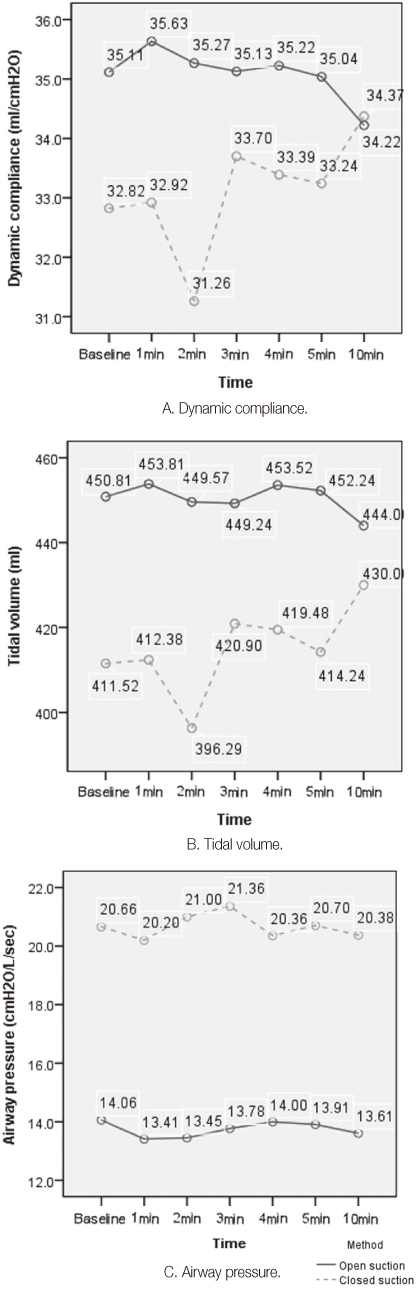
Figure 2 Lung dynamics after open or closed suction.
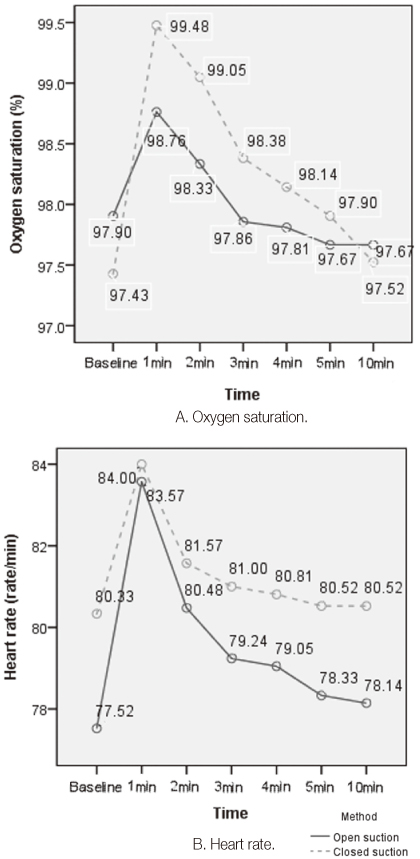
Figure 3 Hypoxemia after open or closed suction.
Reference
-
1. Ahn YM. Concept analysis of endotracheal suctioning (ETS). J Korean Acad Nurs. 2005; 35(2):292–302.2. Rolls K, Smith K, Jones P, Tuipulotu M, Butcher R, Kent B, et al. Suctioning an adult with a tracheal tube. Sydney, AU: NSW Health Statewide Guidelines for Intensive Care;2007.3. Seo MS. A comparison of the open versus closed-system of suctioning in oxygen: In oxygen saturation, vital signs and nursing time [master's thesis]. Seoul: Chung-Ang University;2006.4. Clochesy JM, Breu C, Cardin S, Whittaker AA, Rudy EB. Critical care nursing. 2nd ed. Philadelphia, PA: W. B. Saunders Company;1996.5. Lee ES, Kim SH, Kim JS. Effects of a closed endotracheal suction system on oxygen saturation, ventilator-associated pneumonia, and nursing efficacy. J Korean Acad Nurs. 2004; 34(7):1315–1325.6. Lasocki S, Lu Q, Sartorius A, Fouillat D, Remerand F, Rouby JJ. Open and closed-circuit endotracheal suctioning in acute lung injury: Efficiency and effects on gas exchange. Anesthesiology. 2006; 104(1):39–47.7. Heinze H, Sedemund-Adib B, Heringlake M, Gosch UW, Eichler W. Functional residual capacity changes after different endotracheal suctioning methods. Anesth Analg. 2008; 107(3):941–944. http://dx.doi.org/10.1213/ane.0b013e3181804a5d.8. American Association for Respiratory Care. AARC clinical practice guidelines. Endotracheal suctioning of mechanically ventilated patients with artificial airways 2010. Respir Care. 2010; 55(6):758–764.9. Stenqvist O, Lindgren S, Kárason S, Söndergaard S, Lundin S. Warning! Suctioning. A lung model evaluation of closed suctioning systems. Acta Anaesthesiol Scand. 2001; 45(2):167–172.10. Cereda M, Villa F, Colombo E, Greco G, Nacoti M, Pesenti A. Closed system endotracheal suctioning maintains lung volume during volume-controlled mechanical ventilation. Intensive Care Med. 2001; 27(4):648–654.11. Cho YA. Effect on oxygen saturation, heart rate, mean arterial pressure as type of endotracheal suctioning system to patients are ventilated in intensive care unit [master's thesis]. Seoul: Yonsei University;2007.12. Fernández MD, Piacentini E, Blanch L, Fernández R. Changes in lung volume with three systems of endotracheal suctioning with and without pre-oxygenation in patients with mild-to-moderate lung failure. Intensive Care Med. 2004; 30(12):2210–2215. http://dx.doi.org/10.1007/s00134-004-2458-3.13. Kim MS, Ahn YM, Park IO, Choi SJ, Yoo MY. The effects of open endotracheal suctioning (ETS) and close ETS on oxygen saturation and heart rate in premature infants with respiratory distress syndrome. J Korean Acad Nurs. 1998; 28(3):529–539.14. Almgren B, Wickerts CJ, Heinonen E, Högman M. Side effects of endotracheal suction in pressure- and volume-controlled ventilation. Chest. 2004; 125(3):1077–1080.15. Morrow B, Futter M, Argent A. Effect of endotracheal suction on lung dynamics in mechanically-ventilated paediatric patients. Aust J Physiother. 2006; 52(2):121–126.16. Kim DS. Clinical respiratory physiology. Seoul: Korea Medical Book Publisher;1997.17. Maggiore SM, Lellouche F, Pigeot J, Taille S, Deye N, Durrmeyer X, et al. Prevention of endotracheal suctioning-induced alveolar derecruitment in acute lung injury. Am J Respir Crit Care Med. 2003; 167(9):1215–1224. http://dx.doi.org/10.1164/rccm.200203-195OC.18. Lindgren S, Almgren B, Högman M, Lethvall S, Houltz E, Lundin S, et al. Effectiveness and side effects of closed and open suctioning: An experimental evaluation. Intensive Care Med. 2004; 30(8):1630–1637. http://dx.doi.org/10.1007/s00134-003-2153-9.19. Campbell RS, Davis BR. Pressure-controlled versus volume-controlled ventilation: Does it matter? Respir Care. 2002; 47(4):416–424.20. Jun JH. New modes of mechanical ventilation. J Korean Assoc Respir Care. 2010; 7(1):43–50.21. Weitl J, Bettstetter H. Indications for the use of closed endotracheal suction. Artificial respiration with high positive end-expiratory pressure. Anaesthesist. 1994; 43(6):359–363.22. Drägerwerk AG & Co. KGaA. Evita 4 edition: Excellent performance and reliability. Lübeck, DE: Drägerwerk AG & Co. KGaA;2010.23. Koninklijke Philips Electronics N.V. Intellivue patient monitor MP20: Patient monitoring. Amsterdam, NL: Koninklijke Philips Electronics N.V;2003.24. Marino PL. Department of Anesthesiology and Pain Medicine Yonsei University College of Medicine. The ICU book. 3rd ed. Philadelphia, PA: Lippincott Williams & Wilkins;2006.25. Wellek S, Blettner M. On the proper use of the crossover design in clinical trials: Part 18 of a series on evaluation of scientific publications. Dtsch Arztebl Int. 2012; 109(15):276–281. http://dx.doi.org/10.3238/arztebl.2012.0276.26. Tabachnick BG, Fidell LS. Profile analysis of repeated measures. In : Tabachnick BG, editor. Using multivariate statistics. New York, NY: Harper Collins Publishers Inc;1989. p. 437–505.27. Seymour CW, Cross BJ, Cooke CR, Gallop RL, Fuchs BD. Physiologic impact of closed-system endotracheal suctioning in spontaneously breathing patients receiving mechanical ventilation. Respir Care. 2009; 54(3):367–374.28. Vitaltec Corporation. Vital-Cath™ closed suction systems.[Internet]. Taichung, Taiwan: Vitaltec Corporation;2013. cited 2013 January 3. Available from: http://www.vitaltec.com.tw/products.php?ProType=About&ProID=1.29. Oh H, Seo W. A meta-analysis of the effects of various interventions in preventing endotracheal suction-induced hypoxemia. J Clin Nurs. 2003; 12(6):912–924.
- Full Text Links
-
- Actions
-
Cited
- CITED
-
- Close
- Share
-
- Similar articles
-
- Incidence of Colonization, Ventilator-Associated Pneumonia as Related to the Type of Endotracheal Suction System in Mechanically Ventilated Patients
- Impact of Environmental Contamination Level According to the Endotracheal Suction System in Surgical Intensive Care Unit: A Comparison of Open and Closed System
- Effects of a Closed Endotracheal Suction System on Oxygen Saturation, Ventilator-Associated Pneumonia, and Nursing Efficacy
- The Effects of Open Endotracheal Suctioning(ETS) and Close ETS on Oxygen Saturation and Heart Rate in Premature Infants with Respiratory Distress Syndrome
- A Comparison of the Opened Versus Closed-System of Suctioning : In Oxygen Saturation, Vital Signs and Suction Time


