
A Study of Impact on Head and Neck Using Human Volunteer Low-Speed Rear Impact Tests
- Affiliations
-
- 1Traffic Engineering Division, Forensic Science Department, National Forensic Service, Seoul, Korea.
- 2Western District Office, National Forensic Service, Jangseong-gun, Jeollanam, Korea. rudany@korea.kr
- 3Traffic Accident Division, Forensic Engineering Research Institute, Seoul, Korea. realityz23@gmail.com
- 4Department of Orthopedic Surgery, Seoul Sky Hospital, Seoul, Korea.
- 5Department of Biomedical Engineering, Yonsei University, Wonju-si, Gangwon, Korea.
- KMID: 1433181
- DOI: http://doi.org/10.7580/kjlm.2013.37.2.66
Abstract
- Whiplash injury in low-speed traffic accidents are not objectively verified by medical equipment, thereby creating scope for misuse, which has resulted in huge social losses worldwide. The aim of this study was to examine the influence of low-speed vehicular rear-impact collisions on middle-aged men, and to analyze the head and neck injury criteria for the symptomatic human volunteers. Data was examined from the results of 50 dynamic sled tests, originally performed by Hong et al. (2012). In the previous tests, 50 men aged 30~50 years were exposed to an impulse equivalent to a bumper-to-bumper rear collision under medical supervision, and no resulting whiplash injury was identified. In this study, for 6 subjects who experienced dull aches over their bodies, head injury criteria (HIC15) and neck injury criteria (N(km)) were calculated according to the accelerations, forces, and moments at the occipital condyle measured by motion capture system. Although there were no changes in magnetic resonance imaging findings in all subjects at the pre-/post-test orthopedic examination, 6 subjects revealed mild aches around the shoulder, back, or lumbar area, and their symptoms disappeared within 2 days. The head and neck injury criteria, HIC15 (3.086 +/- 2.942) and N(km) (0.077 +/- 0.064) were obtained, and the maximum HIC15 and N(km) were found to be significantly lower than the critical injury assessment reference values (HIC15: 700, N(km): 0.3). Moreover, even though 2 subjects were exposed to the same level of change of velocity (7.9 km/h), each N(km) was significantly different (0.179, 0.057). One can therefore conclude that N(km) can vary according to voluntary movements in the human subject.
MeSH Terms
Figure
-
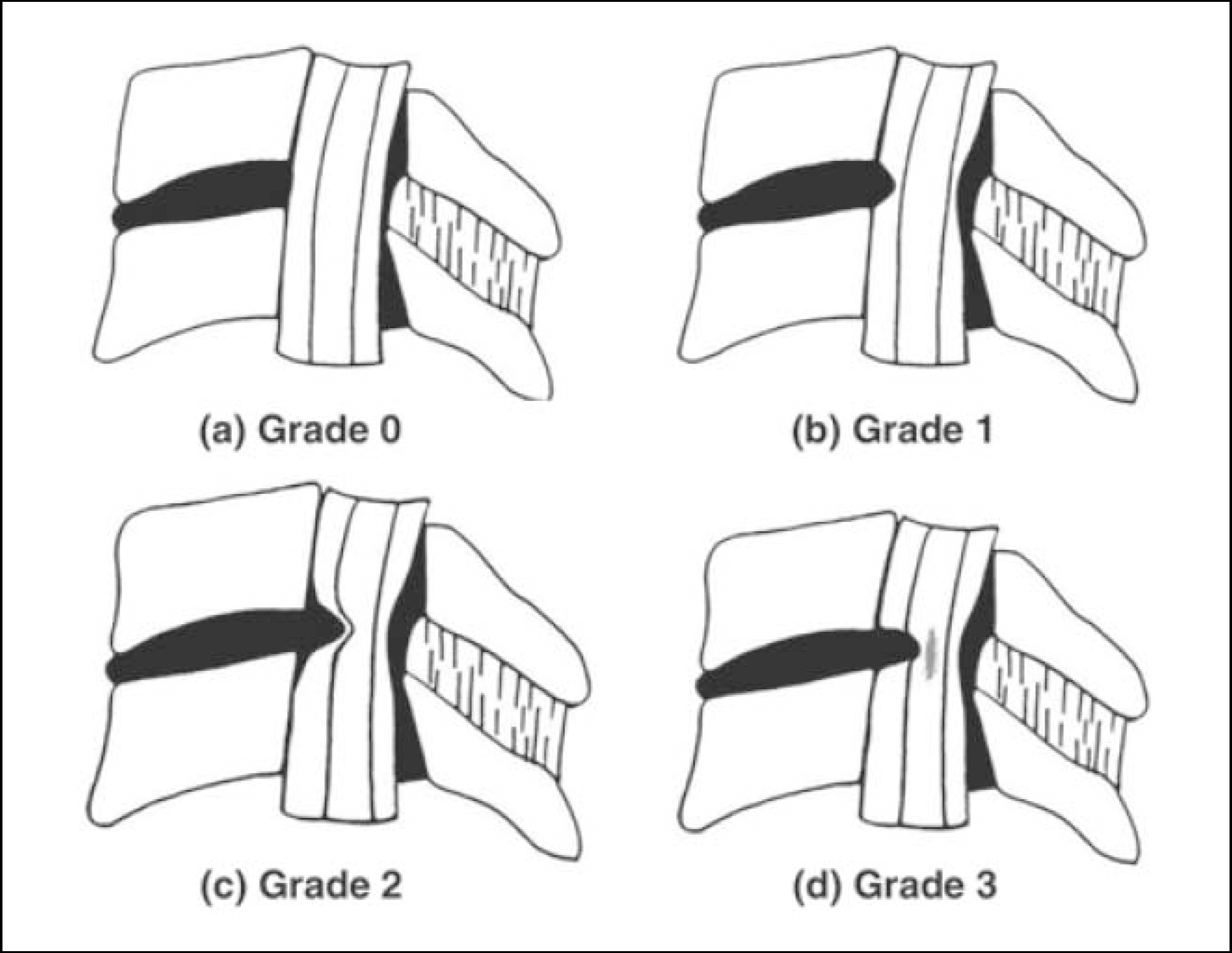
Fig. 1. Schematic diagrams of grading system of cervical canal stenosis in sagittal scans of cervical spines. According to this scheme, MRIs of human subjects were classified.
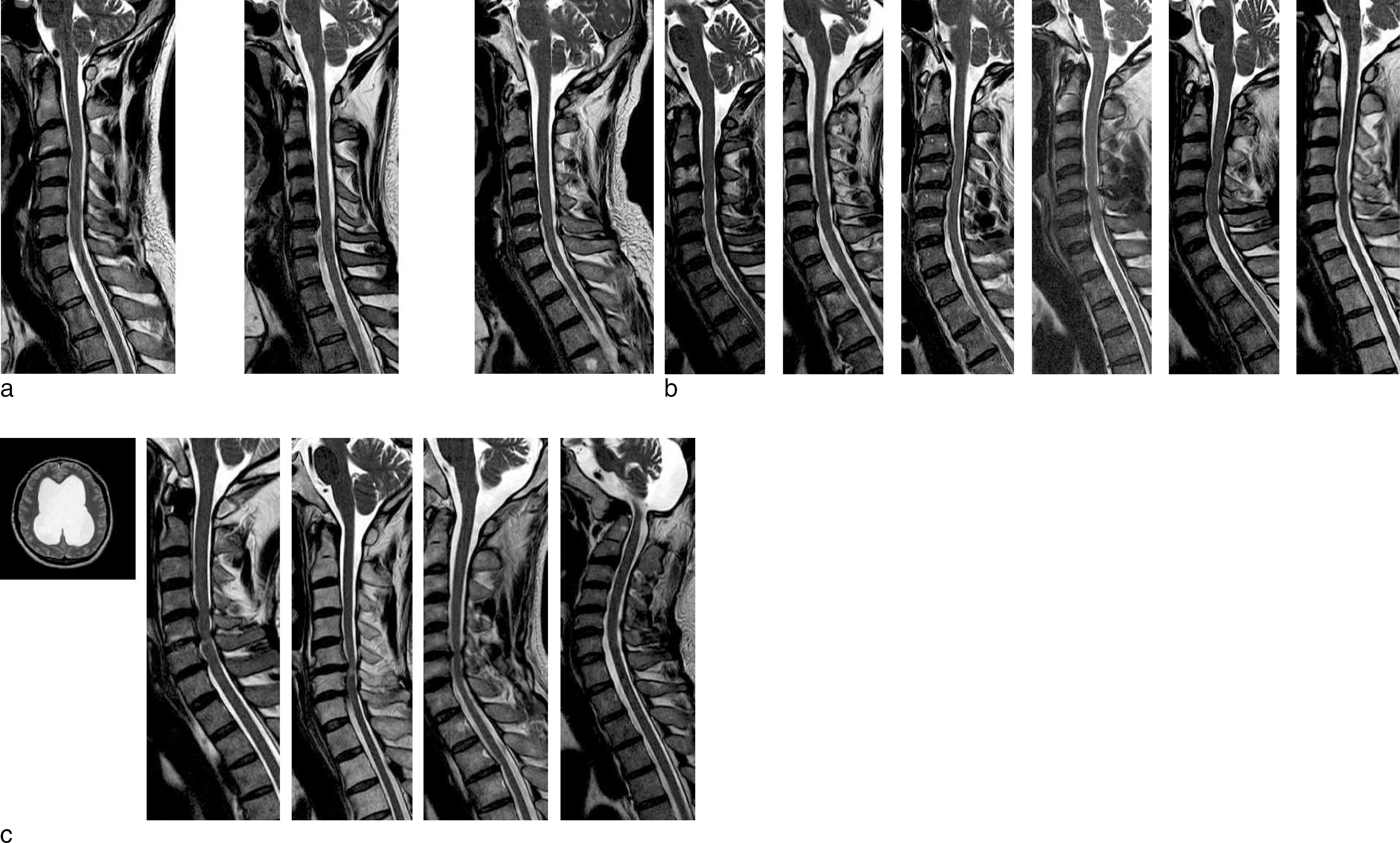
Fig. 2. Examples of human volunteers'MRI grades. Grade 1 denotes obliteration of more than 50% of subarachnoid space without any sign of cord deformity. Grade 2 denotes central canal stenosis with spinal cord deformity. a) Grade 1 b) Grade 2 c) Grade 3
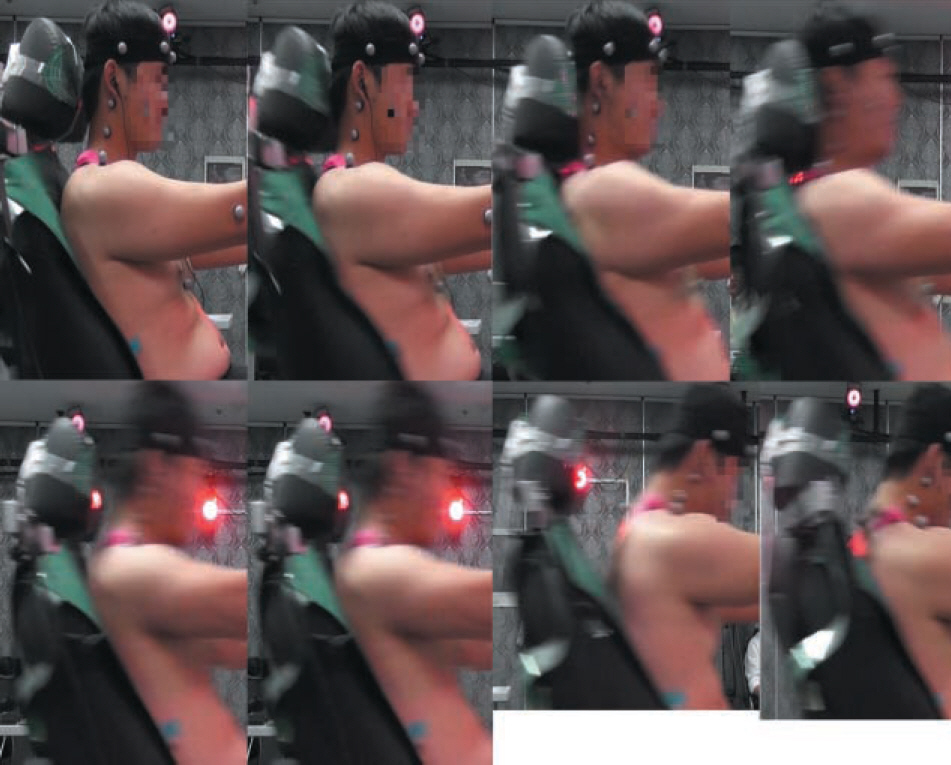
Fig. 3. Movement of a human volunteer (No. 44) at 7.9 ㎞/h of change of velocity. Momentarily, human subject experienced extension and then flexion with 200 ms. Appropriate usage of a headrest can prevent hyper-extension.
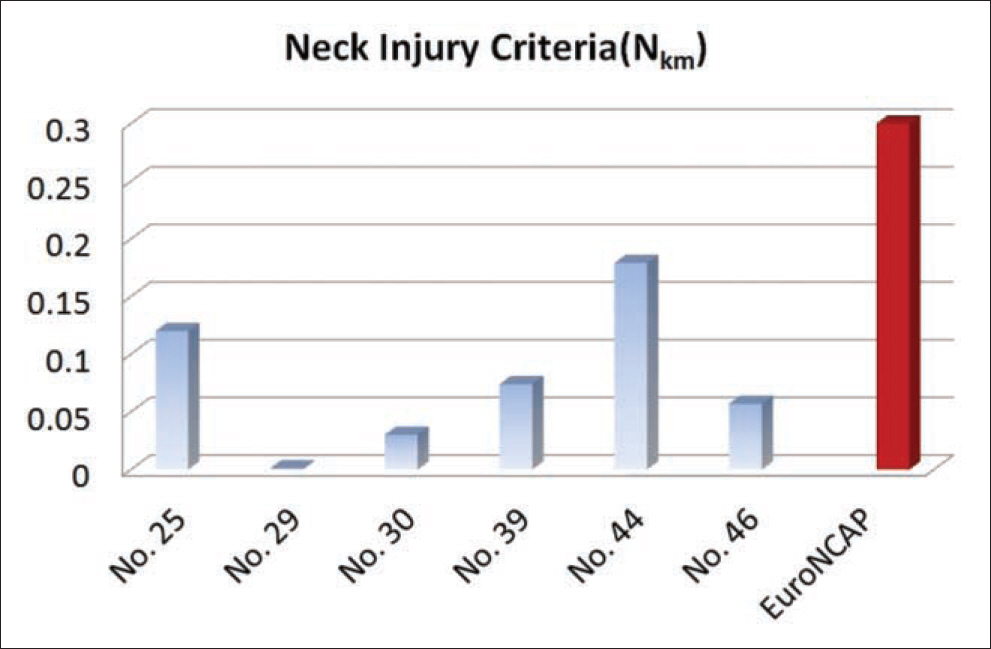
Fig. 4. Comparison of neck injury criteria. Nkm has no unit because of normalization by critical values of shear force and bending moment.
Reference
-
1. US National Highway Transportation Safety Administration. Federal motor vehicle safety standards. Head restraints; Final rule. 49 CFR Part 571.2. Richter M, Otte D, Pohlemann T, et al. Whiplash-type neck distortion in restrained car drivers: frequency, causes and longterm results. Eur Spine J. 2000; 9:109–17.
Article3. Korea Insurance Development Institute 2008 Automobile insurance statistical data. 2008.4. Kim HS, Kim JH. A study of medical expense characteristics whiplash victims on automobile liability insurance. J Risk Manag. 2011; 22:125–53.5. Deutscher C. Flow of movement of vehicle occupants in a rear-end collision: determining objective measured values for assessing type and severity of injury. Doctorate in engineering. 1994.6. McConnell WE, Richard PH, Jon VP, et al. Human head and neck kinematics after low velocity rear-end impacts-understanding “whiplash.” Proceedings of the 39th Stapp Car Crash Conference. 1995. 215–38.7. Castro WH, Schilgen M, Meyer S, et al. Do “whiplash injuries” occur in low-speed rear impacts? Eur Spine J. 1997; 6:366–75.8. Ono K, Kaneoka K. Motion analysis of human cervical vertebrae during low-speed rear impacts by the simulated sled. Crash Prev Injury Control. 1999; 1:87–99.
Article9. Welcher JB, Szabo TJ. Relationships between seat properties and human subject kinematics in rear impact tests. Accid Anal Prev. 2001; 33:289–304.
Article10. Hong SW, Park WP, Park SJ, et al. Motion analysis of head and neck of human volunteers in low-speed rear impact. J Auto-Vehicle Safety. 2012; 4:37–43.11. Watanabe Y, Ichikawa H, Kayama O, et al. Influence of seat characteristics on occupant motion in low-velocity rear-end impacts. Accid Anal Prev. 2000; 32:243–50.12. Davidsson J, Deutscher C, Heel W, et al. Human volunteer kinematics in rear-end sled collisions. Traffic Inj Prev. 2001; 2:319–33.
Article13. Siegmund GP, Heinrichs BE, Lawrence JM, et al. Kinetic and kinematic responses of the RID2a, Hybrid III and human volunteers in low-speed rear-end collisions. Stapp Car Crash J. 2001; 45:239–56.
Article14. Kang Y, Lee JW, Koh YH, et al. New MRI grading system for the cervical canal stenosis. Am J Roentgenol. 2011; 197:W134–40.
Article15. Bostro ¨m O, Svensson MY, Aldman B, et al. A new neck injury criterion candidate-based on injury findings in the cervical spinal ganglia after experimental neck extension trauma. Proceedings of the international IRCOBI conference on the biomechanics of impact. 1996.16. Eichberger A, Darok M, Steffan H, et al. Pressure measurements in the spinal canal of postmortem human subjects during rear-end impact and correlation of results to the neck injury criterion. Accid Anal Prev. 2000; 32:251–60.
Article17. Yoganandan N, Pintar FA, Stemper BD, et al. Biomechanics of human occupants in simulated rear crashes: documentation of neck injuries and comparison of injury criteria. Stapp Car Crash J. 2000; 44:189–204.18. SchmittK-U. Muser MH, Walz FH, et al. N ㎞ - a proposal for a neck protection criterion for low-speed rear-end impacts. Traffic Inj Prev. 2002; 3:117–26.19. Park SJ, Lee HS, Joh GW, et al. Neck fracture case at low speed in frontal collision. Korean J Leg Med. 2007; 31:175–9.20. Kullgren A, Eriksson L, Bostroem O, et al. Validation of neck injury criteria using reconstructed real-life rear-end crashes with recorded crash pulses. Int’ l ESV Conference. 2003.21. European New Car Assessment Programme (EuroNCAP), Assessment protocol and biomechanical limits, Ver. 4.1 March 2004. Available at. http://www.euroncap.com.22. Vernon H, Mior S. The neck disability index: a study of reliability and validity. J Manipulative Physiol Ther. 1991; 14:409–15.
- Full Text Links
-
- Actions
-
Cited
- CITED
-
- Close
- Share
-
- Similar articles
-
- Simultaneous Three-Dimensional Analysis of Cervical Spine Kinematics in the Axial and Sagittal Views during a Simulated Frontal Impact: Differences between Tensed and Relaxed States
- Vaccine Strategy to Human Papilloma Virus(HPV) Positive Head and Neck Squamous Cell Cancers
- Peri-Treatment Evaluation of Swallowing in Head and Neck Cancer Patients
- A comparison study of the effects of handpiece speed on teeth in debonding procedure
- A clinical study on neck dissection in cases of head and neck cancer


